
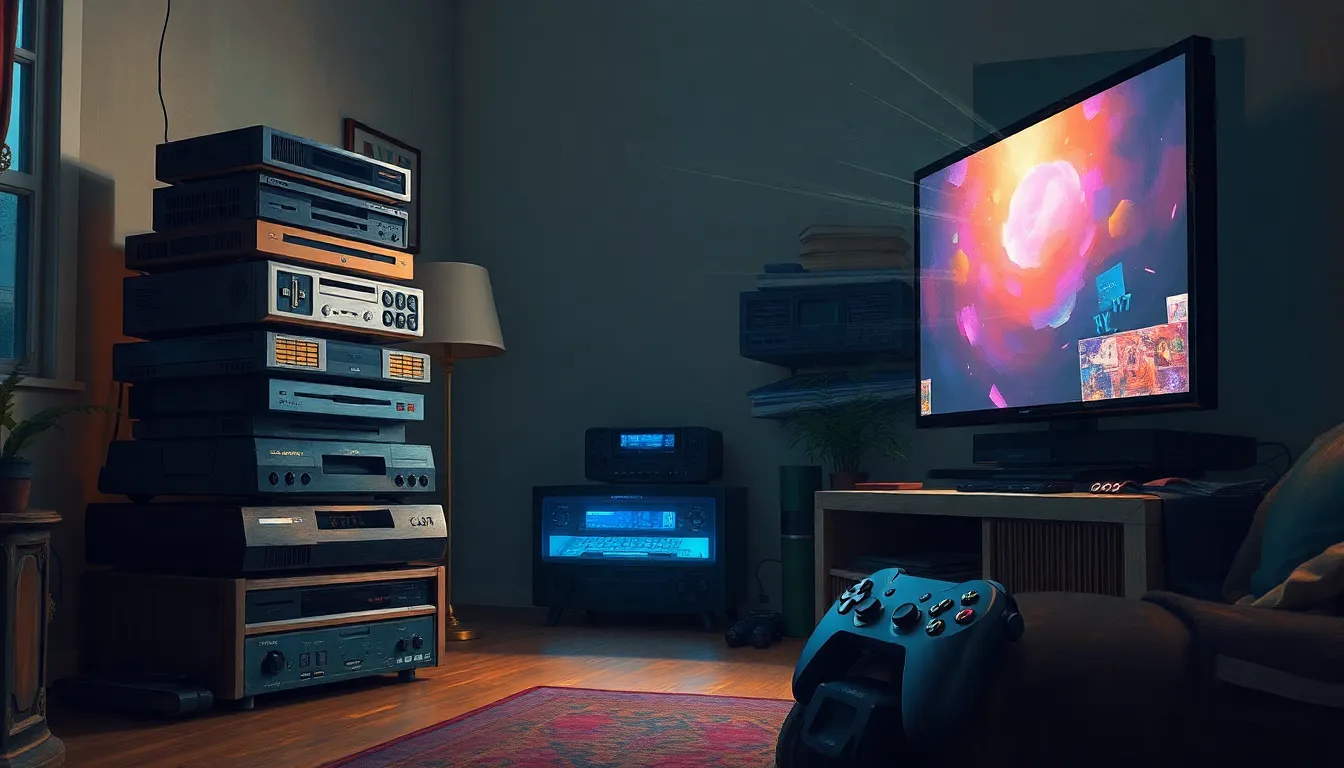
Gaming consoles have come a long way from simple paddle controllers and blocky graphics to immersive virtual worlds and photorealistic experiences. What started as a curiosity in living rooms during the 1970s has grown into a massive global industry that shapes entertainment, technology, and culture. Understanding this journey helps us appreciate not just how far we've come, but where interactive entertainment might be headed next. From the pioneering Magnavox Odyssey to today's powerhouse systems, each generation of consoles has pushed boundaries and redefined what's possible in home gaming.
The Birth of Home Gaming
When the Magnavox Odyssey arrived in 1972, it introduced something completely new: the ability to play video games at home. Before this moment, gaming meant visiting an arcade or relying on traditional board games. The Odyssey was primitive by modern standards, using plastic overlays on the TV screen to create different game environments, but it proved people wanted interactive entertainment in their living rooms.
The real breakthrough came in 1977 when Atari launched the 2600. This wasn't just another console - it was the first system to use interchangeable cartridges, meaning you could build a game library instead of being stuck with whatever was built into the hardware. Suddenly, gaming became collectible and expandable. Atari also pioneered third-party game development, allowing companies like Activision to create games for their platform. This openness created a thriving ecosystem, though it eventually led to market saturation and the infamous video game crash of 1983.
That crash nearly killed home gaming entirely. Store shelves were flooded with poor-quality games, consumer confidence plummeted, and major retailers stopped carrying video game products. It took a playing card company from Japan to revive the industry.
Nintendo's Rescue and the Console Wars
Nintendo, which started as a playing card manufacturer in 1889, released the Nintendo Entertainment System in 1985 and rescued the industry from near-extinction. The NES succeeded by implementing quality control - Nintendo approved every game released for their system, preventing the flood of garbage that had killed Atari. Games like Super Mario Bros. and The Legend of Zelda showed what thoughtful game design could achieve, creating franchises that remain popular today.
The late 1980s and 1990s sparked fierce competition. Sega challenged Nintendo's dominance with the Genesis, marketing directly to older players with edgier games and the slogan "Genesis does what Nintendon't." This rivalry pushed both companies to innovate faster. Nintendo responded with the Super NES, which featured more advanced graphics and sound capabilities.
🧐 Did You Know? The Nintendo 64 controller introduced the analog stick to mainstream console gaming in 1996, enabling the precise 3D movement that games like Super Mario 64 needed. Before this innovation, players relied on digital directional buttons that only registered eight directions, making 3D exploration awkward and limited.
The mid-1990s brought the shift to 3D gaming. Sony entered the market with the PlayStation in 1995, using CD-ROMs instead of cartridges. CDs were cheaper to manufacture and held far more data, allowing for fuller soundtracks, voice acting, and more complex games. The PlayStation appealed to older audiences with titles like Final Fantasy VII and Metal Gear Solid, expanding gaming's demographic beyond children and teenagers.
The Online Revolution and Modern Gaming
Microsoft shook up the industry in 2001 with the original Xbox, which included a built-in hard drive and Ethernet port. This made online multiplayer accessible from day one. Xbox Live, launched in 2002, created a unified online service where players could compete against others worldwide, chat with friends, and download new content. This transformed gaming from a largely solitary or local multiplayer experience into a connected, social activity.
Meanwhile, Nintendo took a different path with the Wii in 2006. Instead of competing on graphics and processing power, Nintendo focused on motion controls and accessibility. The Wii brought gaming to audiences who'd never picked up a controller before - grandparents, parents, and casual players who found traditional gaming intimidating. It proved that innovation didn't always mean more power.
The PlayStation 3 and Xbox 360 generation saw gaming consoles evolve into entertainment hubs. These systems played Blu-ray movies, streamed Netflix, and served as media centers. Gaming was no longer the only reason to own a console. This trend has only intensified - modern consoles like the PlayStation 5 and Xbox Series X offer streaming apps, web browsers, and social features alongside gaming.
Today's consoles pack incredible power. Ray tracing brings movie-quality lighting to games. Solid-state drives eliminate loading screens that used to interrupt gameplay. Haptic feedback controllers let you feel the texture of different surfaces or the tension of a bowstring. Cloud gaming services are beginning to challenge whether we even need dedicated hardware - you can now stream high-end games to phones, tablets, or budget laptops.
Conclusion
The evolution of gaming consoles reflects broader technological progress and changing entertainment habits. We've moved from simple light-gun games with plastic overlays to expansive open worlds that rival Hollywood productions in scope and budget. Each generation has introduced new ways to play, expanding who games are for and what they can do.
What's striking is how each major shift faced skepticism. Critics doubted cartridges would catch on. They questioned whether 3D gaming had a future. They dismissed motion controls as gimmicks and predicted cloud gaming would never work. Yet each innovation found its audience and pushed the medium forward.
Looking ahead, the boundaries between consoles, PCs, and cloud services are blurring. Cross-platform play lets friends game together regardless of their hardware. Subscription services offer libraries of hundreds of games for a monthly fee. Virtual reality is slowly maturing. The next evolution might not be a new console generation at all, but rather a fundamental shift in how we access and experience games. Whatever comes next, it'll build on five decades of innovation, competition, and the simple human desire to play.
FAQs
What was the first video game console ever made?
The Magnavox Odyssey, released in 1972, was the first commercial home video game console. It used simple graphics overlaid with plastic sheets on the TV screen and came with dice and cards for certain games, blending traditional and electronic gameplay.
Why did the Atari 2600 become so popular?
The Atari 2600's success came from its use of interchangeable game cartridges, which allowed players to build game libraries rather than being limited to built-in games. It also supported third-party developers, creating a diverse catalog of games that kept players engaged and the platform fresh.
How did Nintendo save the video game industry in the 1980s?
After the 1983 video game crash nearly destroyed the industry, Nintendo revived it with the NES in 1985 by implementing strict quality control on games, ensuring only approved titles reached consumers. Strong first-party games like Super Mario Bros. and The Legend of Zelda also restored consumer confidence in home gaming.
What's the difference between current-gen and last-gen consoles?
Current-generation consoles like the PlayStation 5 and Xbox Series X feature solid-state drives for faster loading, ray tracing for realistic lighting, higher frame rates for smoother gameplay, and more powerful processors that enable larger, more detailed game worlds compared to previous systems.
Will cloud gaming replace traditional consoles?
Cloud gaming is growing but hasn't replaced consoles yet. While it offers convenience and eliminates the need for expensive hardware, it requires fast, stable internet connections and still faces latency challenges. Traditional consoles continue to offer the most reliable, high-quality gaming experience, especially for competitive and graphically demanding games.