
When winter arrives and darkness settles in earlier each day, communities across the globe respond with light. From the flickering glow of oil lamps in Indian courtyards to the steady flames of menorahs in Jewish homes, festivals of light connect us through a shared human impulse to push back against the dark. These celebrations carry different names, different histories, and different flavors, but they all revolve around gathering with loved ones, honoring tradition, and welcoming hope into our homes. Understanding how families celebrate these festivals opens a window into the values and customs that shape lives far beyond our own neighborhoods.
Diwali: Five Days of Light in India and Beyond
Diwali stands as one of the most widely celebrated festivals of light, observed by millions of Hindu, Sikh, Jain, and Buddhist families primarily in India but increasingly around the world. The festival stretches across five days, each with its own significance and rituals, though the core message remains consistent: the triumph of light over darkness and good over evil.
Preparation starts weeks in advance. Families clean their homes from top to bottom, believing that Lakshmi, the goddess of wealth and prosperity, will only enter a clean dwelling. You will find women and children creating intricate rangoli designs at doorsteps, using colored rice, sand, or powdered limestone to craft geometric patterns and floral motifs that welcome guests and deities alike. These temporary artworks disappear within days, swept away by footsteps and wind, but their creation is part of the joy.
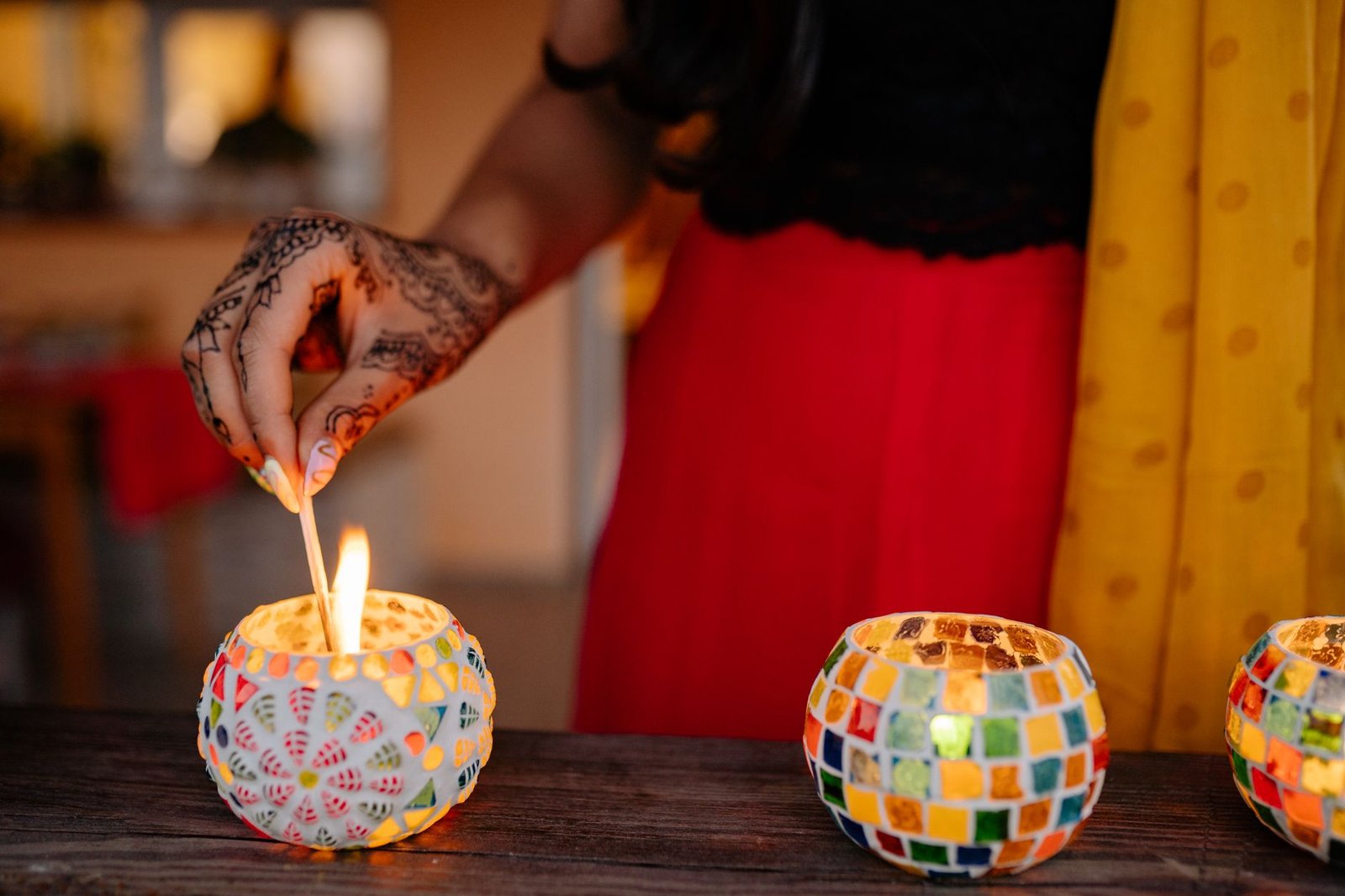
As evening falls during Diwali, homes transform. Families light countless diyas, small clay oil lamps that line windowsills, balconies, and pathways. The soft golden glow competes with strings of electric lights and the sharp bursts of fireworks that fill the night sky. Families gather for prayers, especially to Lakshmi and Ganesha, seeking blessings for prosperity in the year ahead. The air fills with the scent of sweets being prepared in kitchens, from syrupy jalebis to milk-based barfis, all meant for sharing with neighbors, relatives, and anyone who stops by.
Regional variations add richness to the celebration. In northern India, Diwali marks Lord Rama's return from exile. In southern states, it commemorates Krishna's victory over a demon. In Bengal, families worship Kali instead of Lakshmi. Yet everywhere, the exchange of gifts, the wearing of new clothes, and the gathering of extended family remain constants that bind the festival together.
Hanukkah: The Jewish Festival of Dedication
Hanukkah, known as the Jewish Festival of Lights, unfolds over eight nights, each marked by the lighting of one additional candle on the menorah. The holiday commemorates the rededication of the Second Temple in Jerusalem and centers on the miracle of oil that burned for eight days when there was only enough for one.
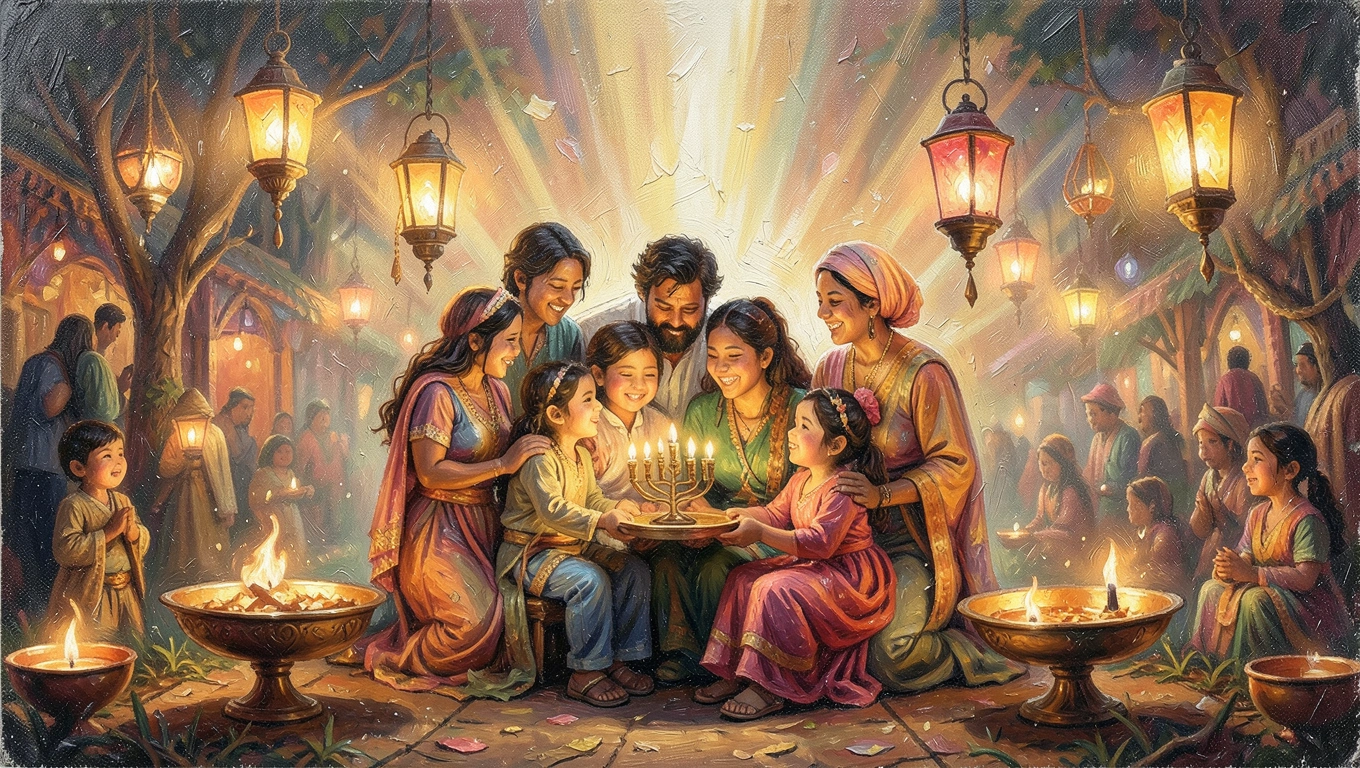
Each evening, families gather as the sun sets to light the menorah, adding one candle for each night of the festival. The shamash, or helper candle, lights the others, and families recite blessings before placing the menorah in a window or doorway where its light can be seen from outside. This public display carries meaning, sharing the miracle and bringing light into the broader community.
Food traditions during Hanukkah revolve around oil, honoring the miracle at the heart of the story. Latkes, crispy potato pancakes fried until golden, are served with applesauce or sour cream. Sufganiyot, jelly-filled donuts dusted with powdered sugar, appear in bakeries and homes throughout the celebration. Some families have created their own menorahs from potatoes, adding a playful element to the ritual while teaching children about the festival's meaning.
🧐 Did You Know? During festivals of light around the world, families often use traditional symbols that carry deep meaning, from the rangoli designs welcoming prosperity in Diwali to the menorah representing the miracle of oil in Hanukkah.
Children play dreidel, a spinning top game with Hebrew letters on each side, often for chocolate coins wrapped in gold foil. Gifts are exchanged, though traditions vary by family and community. The greeting "Hag Hanukkah Sameach" passes between friends and neighbors, and many communities organize charity events during this time, emphasizing the value of giving to those in need. The festival creates space for both solemn remembrance and joyful celebration, balancing history with hope.
Tet Nguyen Dan: Vietnamese Lunar New Year Lights
While Tet Nguyen Dan, the Vietnamese Lunar New Year, may not always carry the "Festival of Lights" label, illumination plays a central role in welcoming the new year and honoring ancestors. Tet represents the most important celebration in Vietnamese culture, a time when families reunite regardless of distance and when the entire country seems to pause for reflection and renewal.
Preparations begin well before the holiday itself. Families clean their homes thoroughly, believing this sweeps away bad luck from the old year and makes room for good fortune. Homes are decorated with bright flowers, particularly peach blossoms in the north and apricot blossoms in the south, along with kumquat trees symbolizing prosperity. Markets overflow with shoppers buying new clothes, special foods, and decorations, creating an atmosphere of anticipation.
On the first day of Tet, immediate family gathers for elaborate meals featuring traditional dishes that carry symbolic meaning. Banh chung, square sticky rice cakes, represent the earth and gratitude to ancestors. Families present offerings at home altars, lighting incense and inviting ancestors to join the celebration. Children receive li xi, lucky money in red envelopes, from elders, a gesture meant to transfer good fortune from one generation to the next.
The celebration extends beyond the first day, with subsequent days dedicated to visiting extended family, teachers, and friends. Fireworks and lights illuminate public spaces, though the glow also comes from something less tangible: the warmth of reconnection and the renewal of relationships that sustain communities throughout the year. Everything during Tet aims toward starting fresh, releasing old grievances, and welcoming the year with optimism.
Conclusion
Whether through the oil lamps of Diwali, the candles of Hanukkah, or the festive lights of Tet, families worldwide use illumination to mark transitions, honor the past, and look toward the future. These festivals share common threads despite their different origins: they bring families together, they anchor communities in shared tradition, and they transform ordinary homes into sacred spaces through the simple act of lighting a flame. Food, gifts, prayers, and stories all play their part, but the light itself carries the deepest message. It reminds us that even in the darkest times, we can create warmth and hope together. As these traditions pass from generation to generation, they adapt to new contexts while preserving their essential meaning, proving that the human need for connection and celebration transcends geography and time.
FAQs
What is the main message behind festivals of light?
Most festivals of light celebrate the triumph of good over evil, light over darkness, or knowledge over ignorance. They mark important historical or spiritual events while bringing families and communities together through shared rituals, meals, and celebrations that emphasize hope and renewal.
How long does Diwali last?
Diwali is a five-day festival, with each day holding its own customs and significance. The main celebration typically occurs on the third day, known as Diwali night, when families light the most lamps and gather for prayers to Lakshmi, the goddess of wealth and prosperity.
Why are fried foods traditional during Hanukkah?
Fried foods like latkes and sufganiyot are eaten during Hanukkah because they symbolize the miracle of the oil that burned for eight days in the Temple. Cooking with oil honors this central story and connects families to the historical event the holiday commemorates.
What is the significance of red envelopes during Tet?
Red envelopes, or li xi, contain lucky money given from elders to children and younger family members during Tet. The red color symbolizes good fortune and joy, while the money represents blessings and well-wishes for prosperity in the new year ahead.
Can non-religious families participate in festivals of light?
Many families celebrate cultural aspects of these festivals without strict religious observance, focusing on the values of family gathering, sharing meals, and welcoming light during darker months. The traditions often carry cultural and community significance that extends beyond purely religious meaning.