
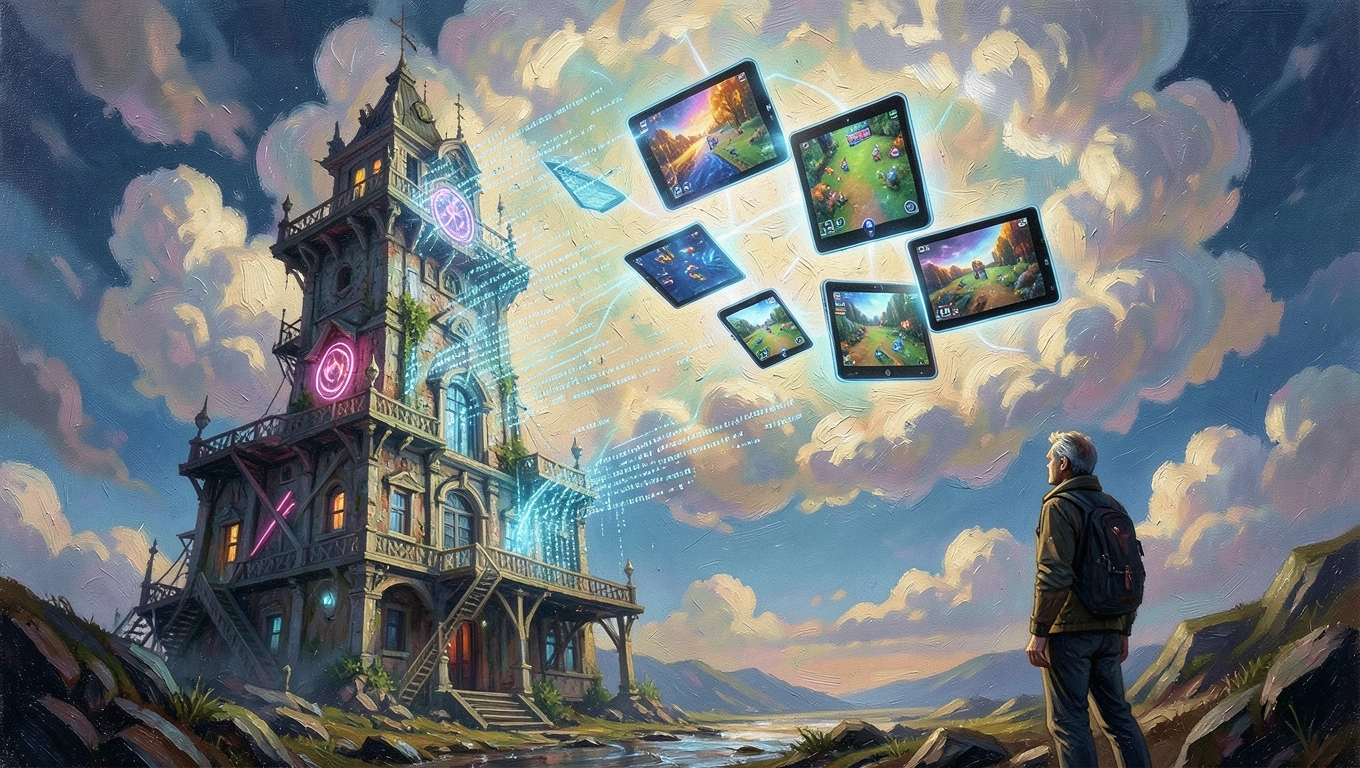
Gaming used to require serious hardware investment. Want to play the latest AAA title? That meant shelling out for a powerful graphics card, a fast processor, and enough RAM to keep everything running smoothly. The barrier to entry was high, and upgrades came around every few years. But cloud gaming is changing that equation. By streaming games from remote servers directly to your device, these services promise high-quality gaming without the high-end hardware. The question is whether this shift genuinely marks the end of expensive gaming rigs, or if it's just another option in an already crowded marketplace.
How Cloud Gaming Actually Works
The concept behind cloud gaming is straightforward. Instead of your computer or console doing the heavy lifting, powerful servers in data centers run the game. Your device simply receives a video stream of the gameplay and sends your controller inputs back to the server. It's similar to streaming a movie on Netflix, except you're actively controlling what happens on screen. This means you can play demanding games on devices that would normally struggle to run them, like older laptops, tablets, or even smartphones.
The technology relies heavily on internet speed and latency. A strong, stable connection is essential because any delay between your input and the server's response creates lag, which can ruin fast-paced games. Most services recommend at least 15-20 Mbps for decent quality, with higher speeds needed for 4K streaming. Cloud providers have built extensive server networks to reduce the physical distance between players and data centers, minimizing that crucial delay. When everything works well, the experience can feel surprisingly close to playing on local hardware.
The Major Players and What They Offer
Several companies have staked their claim in the cloud gaming space, each with different approaches and pricing models. Nvidia GeForce Now operates on a bring-you-own-game philosophy. You can use a Free tier with one-hour sessions, though you'll encounter ads and waiting periods. The Performance tier runs $9.99 monthly or $99.99 yearly, giving you six-hour sessions with priority access. The Ultimate tier costs $19.99 per month or $199.99 annually, extending sessions to eight hours with enhanced features. Starting in 2026, paid subscribers face a 100-hour monthly cap, with additional 15-hour blocks available for purchase.
Xbox Cloud Gaming has introduced standalone "Cloud Playtime" packs for those without a Game Pass subscription. These packs cost $3.99 for 10 hours, $7.99 for 25 hours, or $11.99 for 50 hours, offering ad-free streaming with shorter wait times. Game Pass subscribers will also see monthly limits starting in November, with Essential capped at five hours, Premium at ten hours, and Ultimate at fifteen hours. PlayStation Plus Premium takes a different route, bundling cloud streaming into its top subscription tier at $19.99 monthly or $159.99 yearly. This includes streaming on PS5, PS4, and PC, plus access to classic games and trials without installation requirements.
🧐 Did You Know? Cloud gaming lets you start playing a game instantly without downloading or installing anything, which can save hours of waiting compared to traditional digital purchases that require large downloads before you can play.
The Real Cost Comparison
When you break down the numbers, cloud gaming looks attractive on paper. A gaming PC capable of running modern titles at high settings can easily cost over a thousand dollars. Graphics cards alone often run several hundred dollars, and that's before factoring in the processor, motherboard, RAM, storage, and everything else. Consoles offer a more affordable entry point, but they still represent a significant upfront investment, and you'll eventually need to upgrade to the next generation.
Cloud gaming subscriptions spread that cost across monthly payments. If you're paying around $10 to $20 per month, you're looking at $120 to $240 annually. Over five years, that's still well below the cost of a high-end gaming PC. But there are catches. You don't own the hardware, so you're perpetually paying as long as you want to play. Usage caps on some services mean heavy gamers might need to purchase additional hours or face restricted playtime. Internet data caps can also become a hidden cost, as streaming games consumes substantial bandwidth. A few hours of cloud gaming each day can quickly eat through monthly data allowances if your ISP enforces them.
There's also the game library consideration. Some services require you to already own the games you want to stream, while others bundle games into the subscription. If you're someone who plays a wide variety of titles, cloud gaming's evolving business models might work in your favor. But if you have specific games you return to repeatedly, owning them outright on your own hardware might make more financial sense long-term.
Where Cloud Gaming Struggles
Despite the advantages, cloud gaming hasn't replaced traditional hardware yet, and there are legitimate reasons why. Latency remains the biggest technical hurdle. Competitive multiplayer games demand split-second reactions, and even small delays can put cloud players at a disadvantage against those on local hardware. Fighting games, first-person shooters, and rhythm games are particularly sensitive to this issue. While improvements in infrastructure continue to reduce latency, it's still a factor that affects the experience.
Visual quality can also take a hit. Streaming compression means you're not seeing the game in its native form. Artifacts, blurriness during fast motion, and color banding can occur, especially on lower-tier subscriptions or weaker internet connections. Gamers who value visual fidelity and maximum frame rates will notice the difference. Then there's the simple reality of internet access. Not everyone has reliable high-speed internet. Rural areas, regions with limited infrastructure, and places with data caps or unreliable connections make cloud gaming impractical. You also can't play when the internet goes down, unlike with locally installed games.
The subscription fatigue factor shouldn't be ignored either. We're already juggling multiple streaming services for movies and music. Adding another monthly gaming bill on top of that can feel like yet another drain on the budget, especially when you consider that many games still require separate purchases or come with their own microtransactions.
Conclusion
Cloud gaming isn't going to eliminate expensive hardware overnight, but it's carving out a meaningful space in the gaming world. For casual players, those with budget constraints, or anyone who values convenience over absolute performance, it offers a genuinely viable alternative. You can sample games without commitment, play across multiple devices, and avoid the hassle of hardware upgrades. But for enthusiasts who demand zero latency, maximum visual quality, and the satisfaction of owning their hardware, traditional gaming setups still hold strong appeal. The future likely isn't one or the other. It's both, coexisting and serving different needs. Cloud gaming makes the hobby more accessible, which is valuable. But the gaming PC and console aren't disappearing. They're just sharing the stage with a new option that works for a lot of people in a lot of situations.
FAQs
Can I play all my Steam games through cloud gaming?
It depends on the service. Nvidia GeForce Now supports many Steam games, but not every title in your library will be available due to publisher agreements. You need to check if the specific games you want to play are supported. Other services like Xbox Cloud Gaming and PlayStation Plus Premium operate on their own game catalogs, so your existing Steam library won't transfer directly to those platforms.
What internet speed do I really need for cloud gaming?
Most services recommend at least 15-20 Mbps for 1080p streaming at 60 fps. If you want 4K quality, you'll need 35 Mbps or higher. Equally important is connection stability and low latency. A wired ethernet connection typically performs better than Wi-Fi because it reduces packet loss and jitter, which affect gameplay smoothness more than raw download speed.
Does cloud gaming use a lot of data?
Yes, cloud gaming can consume significant amounts of data. Streaming at 1080p can use several gigabytes per hour, while 4K streaming can go much higher. If your internet plan has a monthly data cap, you'll need to monitor your usage carefully, especially if you play for multiple hours daily. This can become a limiting factor for heavy users on capped plans.
Will cloud gaming replace gaming consoles and PCs?
Not entirely, at least not in the near future. Cloud gaming works well for many players and situations, but enthusiasts who prioritize performance, own extensive physical game collections, or have unreliable internet will continue choosing traditional hardware. The two approaches will likely coexist, each serving different segments of the gaming audience based on their priorities and circumstances.
Can I use my existing controllers with cloud gaming?
Generally yes, most cloud gaming services support standard controllers. Xbox controllers, PlayStation controllers, and many third-party options work across different services. You'll need to check compatibility for your specific controller and device combination, but the major platforms have broad controller support to ensure you can use what you already own rather than buying new peripherals.