
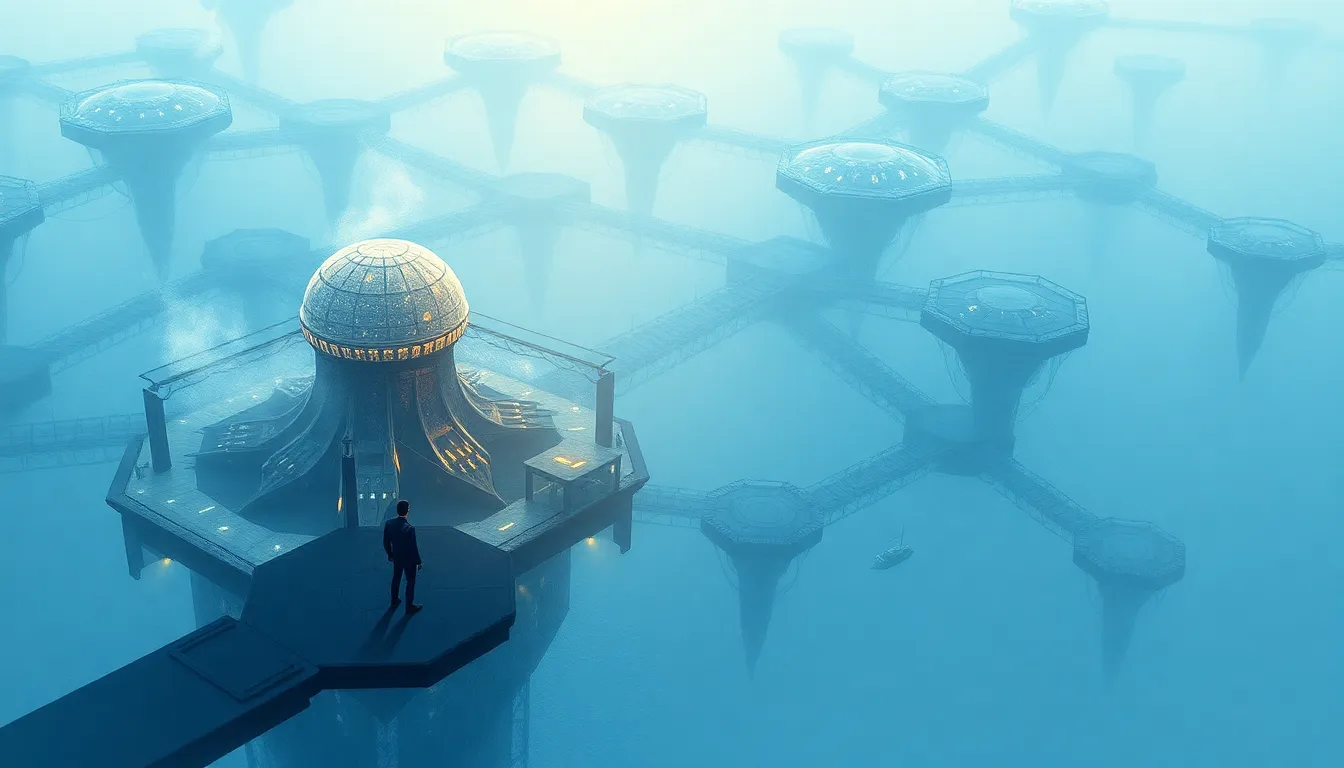
Ocean Cities: Is the Future Aquatic?
Rising sea levels, crowded coastlines, and dwindling land space have sparked an ambitious question: what if we built our cities on water instead of fighting against it? Ocean cities aren't just science fiction anymore. From floating neighborhoods in the Netherlands to massive maritime platforms in Singapore, we're witnessing the early stages of humanity's next chapter - life on the waves.
The concept sounds radical, but consider this: 71% of Earth's surface is water, yet we cram billions of people onto increasingly expensive and environmentally stressed land. As climate change reshapes our coastlines and urban populations explode, floating cities offer a compelling solution. They promise sustainable living, climate resilience, and room to grow where traditional cities cannot. But can these aquatic communities actually work, or are we just dreaming of an impossible future?
The Technology Making Ocean Cities Reality
Building cities that float isn't about throwing some pontoons under a neighborhood and calling it done. Modern ocean city designs rely on sophisticated engineering that would make naval architects proud. Take the Oceanix Busan project in South Korea, which breaks new ground with its modular hexagonal platforms. These structures can connect like puzzle pieces, creating neighborhoods that expand and contract based on population needs.
The secret sauce lies in biomimicry and materials science. Engineers study how sea creatures like jellyfish and kelp forests handle ocean currents, then apply those lessons to platform design. Advanced composites resist corrosion while flexible joint systems allow entire sections to move with the waves rather than fight them. Solar panels, wind turbines, and wave energy converters turn these floating communities into power-positive environments.
Water management becomes surprisingly elegant too. Desalination systems produce fresh water, while sophisticated filtration processes handle waste. Some designs even incorporate aquaculture farms underneath living spaces, creating closed-loop ecosystems where fish waste fertilizes floating gardens above. The technology exists today - we're just scaling it up from research installations to full communities.
Who's Actually Building These Floating Dreams
While futurists debate possibilities, several countries are already testing the waters. The Netherlands leads the pack with floating neighborhoods in Amsterdam that house hundreds of residents. These aren't houseboats - they're permanent structures connected to city utilities and transportation networks. Residents report that gentle rocking actually improves their sleep quality.
Singapore takes a different approach with its floating solar farms and recreational platforms. These installations prove that large-scale ocean infrastructure can withstand tropical storms and busy shipping lanes. Meanwhile, French Polynesia partnered with the Seasteading Institute to develop autonomous floating islands, though political complications have slowed progress.
🧐 Did You Know? Venice has been a floating city for over 1,500 years, built on more than 100 small islands connected by canals. Its wooden foundation posts, driven deep into the lagoon floor, have actually become stronger over time as the saltwater turned the wood into stone-like material.
Private developers are jumping in too. Ocean Builders creates luxury floating homes for wealthy clients, while companies like Blue Frontiers focus on sustainable communities for middle-class families. Each project teaches valuable lessons about everything from internet connectivity to garbage collection on floating platforms.
The Reality Check: Challenges and Limitations
Before we all pack our bags for life on the waves, let's address the elephant in the floating room. Ocean cities face serious challenges that landlubbers rarely consider. Storms represent the obvious threat - even advanced platforms struggle with category 4 hurricanes or massive swells. Emergency services become complicated when your neighborhood might drift several miles overnight.
Economics present another headache. Initial construction costs run three to five times higher than equivalent land-based development. Insurance companies charge premium rates for structures that face constant saltwater exposure and weather extremes. Transportation costs increase when every trip to the mainland requires boats or helicopters.
Social factors matter too. Humans evolved on solid ground, and some people never adapt to constant motion. Seasickness, psychological stress from isolation, and cabin fever affect certain residents more severely than others. Children need stable environments for proper development, which floating platforms may not provide. Legal frameworks remain murky - which country's laws apply to citizens living in international waters?
Environmental concerns also complicate the picture. Large floating structures can disrupt marine ecosystems, blocking sunlight from reaching underwater plants or interfering with migration patterns. Even eco-friendly designs create waste streams and require regular maintenance that impacts ocean health.
What Ocean Cities Mean for Our Future
Despite the challenges, ocean cities represent more than ambitious engineering projects. They embody our species' adaptability and willingness to reimagine how we live. Climate refugees from rising sea levels need somewhere to go, and floating communities could provide dignified alternatives to overcrowded displacement camps.
The economic potential extends beyond housing. Ocean cities could become centers for marine research, sustainable fishing, renewable energy production, and mineral extraction. Imagine universities built on floating platforms, positioned above coral reefs for marine biology research, or manufacturing facilities that use wave power and process raw materials from underwater mining operations.
These aquatic communities might also solve political problems. Floating cities could provide homes for stateless populations, create neutral zones for international cooperation, or offer fresh starts for communities seeking self-governance. The ocean offers space for experiments in social organization that land-based societies can't accommodate.
Cultural implications run deeper still. Growing up surrounded by water changes how people relate to nature, technology, and each other. Ocean city residents develop different skills, values, and perspectives compared to land dwellers. They might become Earth's first truly global citizens, equally at home in any body of water worldwide.
Conclusion: Riding the Waves of Change
Ocean cities aren't inevitable, but they're increasingly probable. As land becomes scarcer and more expensive, as climate change reshapes our coastlines, and as technology makes floating communities more viable, we'll likely see more people choosing aquatic lifestyles. The question isn't whether ocean cities will exist, but what form they'll take and who will live in them.
The early adopters won't be climate refugees or futuristic pioneers - they'll be pragmatists seeking affordable housing, clean environments, and room to build communities on their own terms. These floating neighborhoods will start small, prove themselves through storms and economic downturns, then gradually expand as public confidence grows.
Will ocean cities represent humanity's future? Probably not entirely, but they'll likely become a significant piece of it. We're amphibious by nature, equally drawn to land and sea. Ocean cities simply give us permission to explore that aquatic side of our character while solving some very terrestrial problems. The future might be more liquid than we ever imagined.
Are ocean cities safe during storms and rough weather?
Modern floating city designs use flexible platforms and breakwater systems to handle storms up to category 3 hurricanes. However, severe weather remains a significant challenge, and most designs include evacuation protocols for extreme conditions. Advanced warning systems and mobile platforms can move to calmer waters when necessary.
How much does it cost to live in a floating city?
Current floating developments cost 3-5 times more than equivalent land housing due to specialized construction and higher maintenance needs. However, costs are expected to decrease as the technology matures and production scales up. Early floating neighborhoods target middle to upper-middle-class residents.
What laws govern people living in ocean cities?
The legal status varies by location. Floating cities in territorial waters follow the host country's laws, while those in international waters face complex jurisdictional questions. Most current projects establish legal frameworks through partnerships with existing nations rather than claiming independence.
Can floating cities be environmentally sustainable?
Well-designed ocean cities can achieve net-positive environmental impact through renewable energy, waste recycling, and integrated aquaculture systems. However, construction and transportation still create carbon footprints, and large structures can disrupt marine ecosystems if not carefully planned.
Do people get seasick living on floating platforms?
Most residents adapt to gentle motion within a few weeks, and many report better sleep quality from the rocking motion. Modern stabilization systems minimize movement, but some people never fully adjust. Screening processes often identify candidates who are likely to experience chronic motion sickness.