
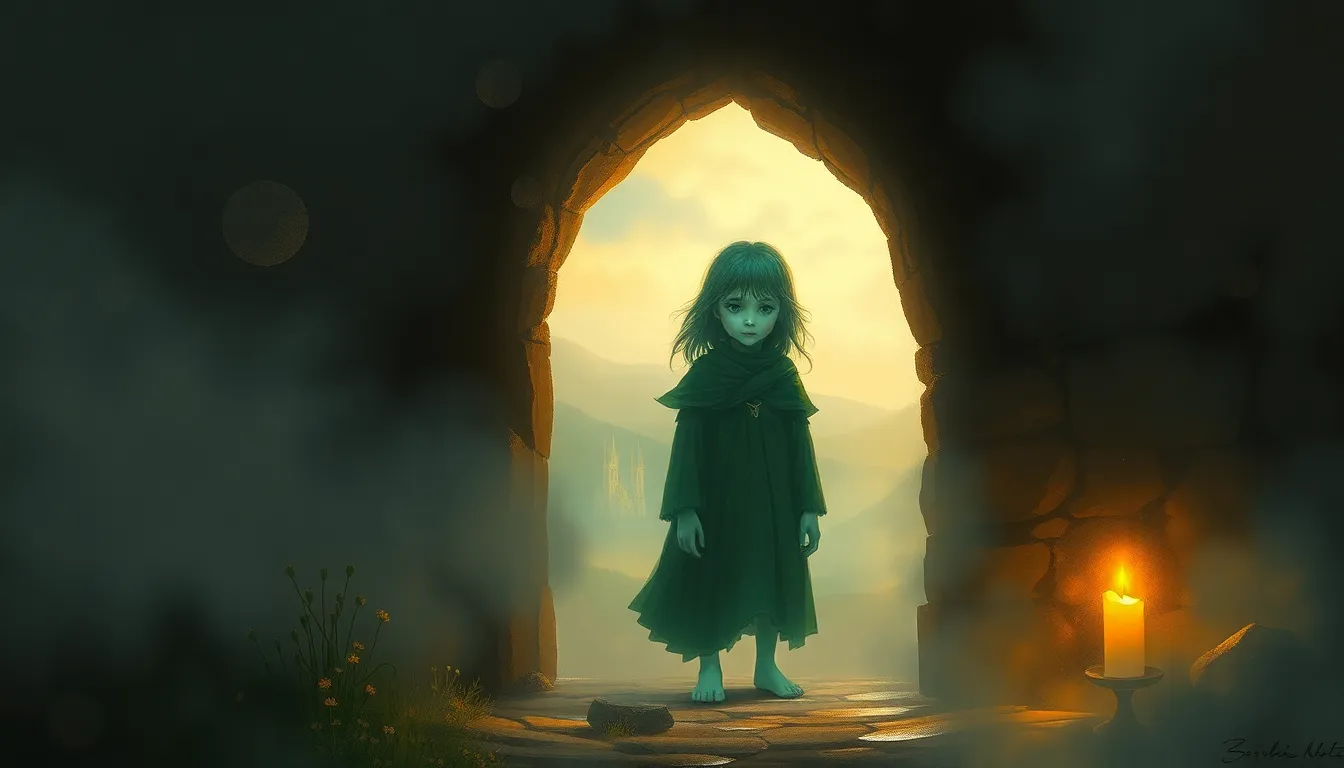
The Green Children of Woolpit: Folklore or Fact?
In the small English village of Woolpit, Suffolk, a mysterious tale has captivated historians, folklorists, and curious minds for over 800 years. Two children with green-tinted skin allegedly appeared in the 12th century, speaking an unknown language and refusing all food except raw beans. Were they visitors from another world, victims of malnutrition, or simply the product of medieval imagination?
This enigmatic story sits at the crossroads of history and legend, challenging our understanding of medieval life while raising fascinating questions about how folklore develops. Whether you believe in otherworldly explanations or prefer rational theories, the Green Children of Woolpit offer a compelling window into both medieval society and our enduring fascination with the unexplained.
The Original Account: What Really Happened?
The story first appears in two 12th-century chronicles written by Ralph of Coggeshall and William of Newburgh. According to their accounts, villagers discovered two children - a boy and girl - near wolf pits used for trapping animals. The children had distinctly green skin, wore strange clothing, and spoke no recognizable language.
Local villagers brought them to the home of Sir Richard de Calne, where the children initially refused all food except raw broad beans. The boy, described as the younger of the two, gradually weakened and died. The girl, however, slowly adapted to normal food, and her green complexion faded to a more typical skin tone.
As the girl learned English, she reportedly explained that she and her brother came from a land called St. Martin's, where the sun never shone brightly and everything appeared in twilight. She claimed they had been tending their father's cattle when they heard bells and followed the sound through caves, eventually emerging in Woolpit. The girl later married and lived what chroniclers described as a normal life, though some accounts suggest she remained somewhat promiscuous in her behavior.
What makes this account particularly intriguing is its documentation by two separate chroniclers who were generally considered reliable historians of their time. Unlike many medieval tales of wonder, this story includes specific names, locations, and seemingly mundane details that give it an air of authenticity.
Scientific Explanations: Looking for Logic
Modern researchers have proposed several rational explanations for the green children phenomenon. The most widely accepted theory involves a condition called hypochromic anemia, often caused by malnutrition. This condition can give skin a distinctly greenish tinge, particularly in children who have been severely malnourished for extended periods.
The children's initial diet of only broad beans supports this theory. Broad beans contain compounds that can be toxic to people with certain genetic conditions, but for severely malnourished individuals, they might have provided essential nutrients that their bodies desperately needed. This could explain why they initially refused other foods - their bodies had adapted to survive on limited nutrition.
Another compelling explanation suggests the children were Flemish immigrants. During the 12th century, many Flemish people fled to England to escape persecution. These refugees often lived in isolated communities and spoke languages that English villagers wouldn't recognize. Flemish children working in agriculture might have developed greenish skin from malnutrition and poor living conditions.
🧐 Did You Know? The village name "Woolpit" comes from "wulf-pytt," meaning wolf pits - deep holes dug to trap wolves that were considered a serious threat to livestock in medieval England.
Some historians point to the nearby village of Fornham St. Martin as the possible origin of the girl's story about "St. Martin's land." The area was known for its Flemish settlements, and the description of a twilight realm could simply reflect a child's confused memories of living in dark, overcrowded conditions or underground shelters.
Cultural Impact and Folklore Evolution
The Green Children of Woolpit story has evolved far beyond its medieval origins, inspiring countless retellings, academic studies, and creative works. This tale represents something deeper than just a historical curiosity - it reflects humanity's enduring fascination with otherness and the unknown.
In medieval times, stories like this served multiple purposes. They entertained audiences while also reinforcing social boundaries and religious beliefs. The children's strange appearance and behavior marked them as fundamentally different, while their eventual integration into Christian society demonstrated the power of faith and civilization to transform even the most alien beings.
Modern interpretations have taken the story in new directions. Some UFO enthusiasts see the children as evidence of extraterrestrial contact, pointing to their strange appearance and claims about coming from another world. Science fiction writers have used the tale as inspiration for stories about parallel dimensions or time travel.
The story also resonates with contemporary discussions about immigration and cultural assimilation. The image of strange children appearing in a community, initially rejected but eventually integrated, mirrors ongoing debates about how societies respond to newcomers who seem fundamentally different.
Academic folklorists study the Green Children as an example of how stories evolve and spread. Each retelling adds new elements while potentially losing others, creating a rich tapestry of meaning that reflects the concerns and interests of different eras. The fact that this particular tale has survived for over 800 years suggests it touches something universal in human experience.
The Search for Truth: Historical Investigation
Modern historians face significant challenges when investigating medieval accounts like the Green Children story. The primary sources - the chronicles of Ralph of Coggeshall and William of Newburgh - were written decades after the alleged events, raising questions about accuracy and possible embellishment.
Archaeological evidence from 12th-century Woolpit provides some context for understanding the story's setting. Excavations have revealed evidence of substantial Flemish immigration to the area, supporting theories about the children's possible origins. The discovery of malnutrition markers in skeletal remains from the period also lends credibility to explanations involving poor nutrition and health conditions.
However, no physical evidence directly supports the existence of the green children themselves. No contemporary records mention unusual children in the household of Sir Richard de Calne, though such records might not have survived the intervening centuries. The absence of documentation doesn't disprove the story, but it highlights the challenges of separating fact from fiction in historical accounts.
Some researchers have attempted to trace the story's transmission from its alleged origins to its appearance in written chronicles. They've identified possible intermediate sources and examined how details might have changed through oral tradition before being recorded. This research suggests that even if the story has some basis in fact, the version we have today likely differs significantly from any original events.
The investigation continues through interdisciplinary approaches, combining historical research with medical knowledge, archaeological findings, and folklore analysis. While we may never know with certainty what happened in 12th-century Woolpit, the ongoing quest for truth reveals as much about human nature and our relationship with mystery as it does about medieval history.
Conclusion: Embracing the Mystery
The Green Children of Woolpit story endures because it captures something essential about the human experience - our encounter with the unexplained and our attempts to make sense of it. Whether the children were malnourished Flemish refugees, victims of a rare medical condition, or something else entirely, their tale reflects both medieval reality and timeless human concerns about otherness, belonging, and transformation.
Perhaps the most honest answer to whether this story represents folklore or fact is that it's both. The account likely contains kernels of truth about real people and real events, transformed through centuries of retelling into something that serves our deeper psychological and cultural needs. The green children have become a mirror in which we see our own questions about identity, difference, and the mysteries that still surround us.
In our age of scientific explanation and digital documentation, stories like this remind us that some mysteries may never be fully solved - and maybe that's exactly as it should be. The Green Children of Woolpit continue to challenge us to think carefully about evidence, remain open to multiple possibilities, and appreciate the complex relationship between history and legend that shapes our understanding of the past.
Were the Green Children of Woolpit real people?
Most historians believe the story has some basis in real events, likely involving malnourished children who appeared in the village. However, the green skin and supernatural elements were probably added through centuries of retelling.
What caused the children's green skin color?
The most accepted explanation is hypochromic anemia caused by severe malnutrition. This condition can give skin a greenish tinge, especially in children who have been undernourished for extended periods.
Where did the Green Children originally come from?
The most likely explanation is that they were Flemish refugee children from a nearby settlement, possibly Fornham St. Martin. Many Flemish people fled to England during the 12th century to escape persecution.
How reliable are the medieval sources about this story?
The chronicles by Ralph of Coggeshall and William of Newburgh were generally considered reliable, but they wrote decades after the alleged events. The story likely changed through oral tradition before being recorded.
Why do people still find this story fascinating today?
The story touches universal themes about otherness, mystery, and belonging. It also represents the eternal human fascination with unexplained phenomena and the boundary between fact and folklore in historical accounts.