
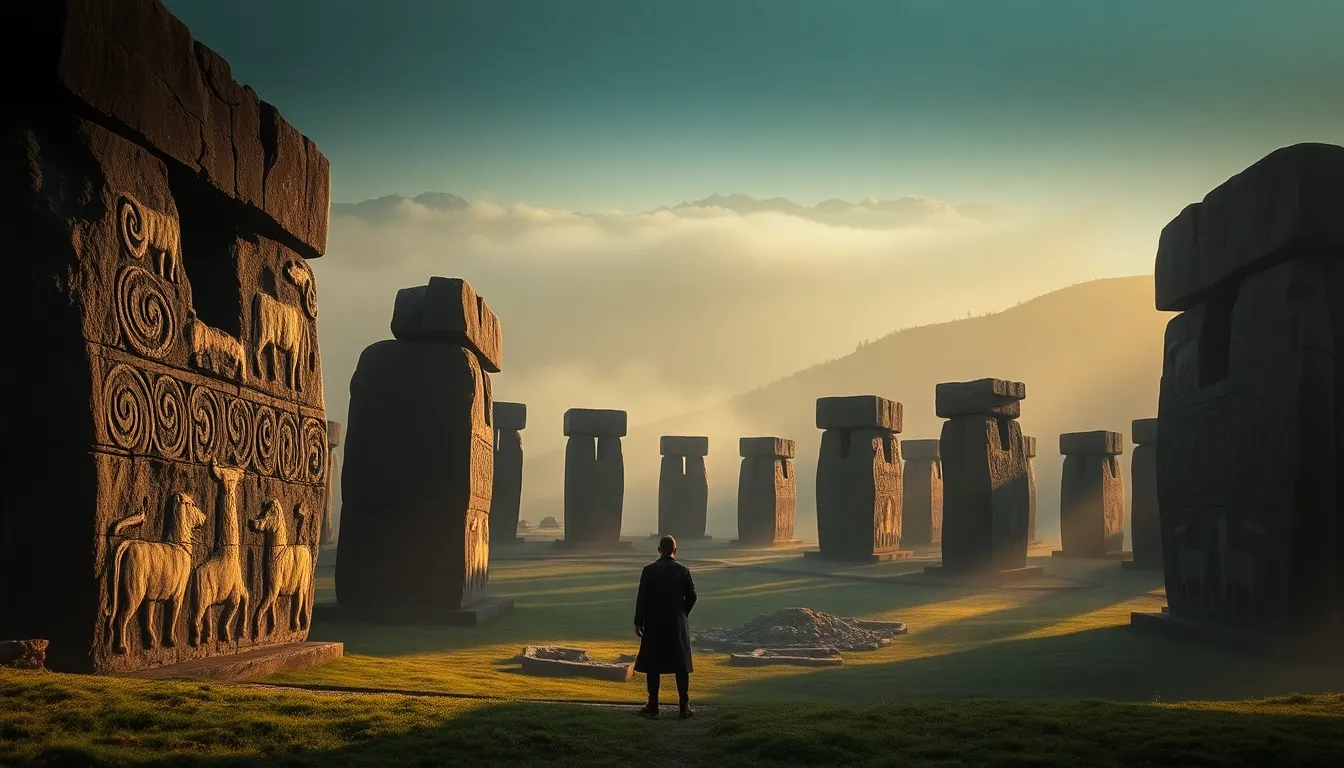
Picture this: you're an archaeologist digging in southeastern Turkey, expecting to find some pottery shards or maybe old tools. Instead, you stumble upon massive stone pillars arranged in perfect circles, covered with intricate carvings of animals that seem to dance across the surface. The kicker? These structures are 12,000 years old - making them older than Stonehenge, older than the pyramids, older than everything we thought we knew about human civilization.
That's exactly what happened when Klaus Schmidt first laid eyes on Göbekli Tepe in 1994. This ancient site didn't just challenge our understanding of prehistoric life - it completely shattered it. We're talking about a time when humans were supposedly just figuring out agriculture, yet here's evidence of sophisticated religious and social organization that predates farming by thousands of years.
Göbekli Tepe forces us to rethink everything about our ancestors. Were they really the simple hunter-gatherers we imagined, or were they capable of much more than we ever gave them credit for?
A Discovery That Changed Everything
When Schmidt and his team began serious excavations at Göbekli Tepe, they quickly realized they weren't dealing with an ordinary archaeological site. The massive T-shaped limestone pillars, some weighing up to 16 tons, were arranged in circular enclosures that clearly served ritual purposes. But here's what really blew their minds - radiocarbon dating revealed these structures were built around 9600 BCE.
To put that in perspective, this was during the Pre-Pottery Neolithic period, when most humans were still living as nomadic hunter-gatherers. The conventional wisdom was that complex religious sites and monumental architecture only emerged after the development of agriculture and permanent settlements. Göbekli Tepe turned that timeline upside down.
The site spans about 22 acres, but only a small fraction has been excavated so far. What archaeologists have uncovered includes at least 20 circular enclosures, each containing dozens of these mysterious pillars. The craftsmanship is extraordinary - detailed carvings of lions, foxes, wild boars, snakes, and birds cover the stone surfaces. These weren't crude scratches made by primitive people; they're sophisticated artistic representations that required skill, planning, and cultural knowledge.
What makes this discovery even more remarkable is that no evidence of permanent habitation has been found at the site. This wasn't a settlement or a fortress - it was purely ceremonial, built specifically for religious or social gatherings that brought together people from across the region.
The People Behind the Monument
Who were the builders of Göbekli Tepe? This question has sparked intense debate among archaeologists and historians. Based on the tools and artifacts found at the site, we know they were skilled hunter-gatherers who lived in the Fertile Crescent region. But their level of organization and technical capability far exceeded anything we previously attributed to people of that era.
Consider the logistics alone. Moving those massive stone pillars required coordination between hundreds, maybe thousands of people. Someone had to quarry the limestone from nearby hills, carve the intricate designs, transport the finished pillars to the site, and erect them with precision. This wasn't the work of a small family group - it required a complex social structure with specialized roles and strong leadership.
The animal carvings provide clues about their worldview and daily life. Many of the creatures depicted - aurochs, gazelles, wild boar - were part of the rich ecosystem that flourished in the region during the early Holocene period. The climate was warmer and wetter then, supporting abundant wildlife that these people hunted and revered.
🧐 Did You Know? Göbekli Tepe was deliberately buried around 8000 BCE. The builders carefully covered their temple complex with tons of earth, preserving it for thousands of years. Why they chose to abandon and bury such an important site remains one of archaeology's greatest mysteries.
Recent genetic studies of people living in the region suggest the builders of Göbekli Tepe were likely the ancestors of early farmers who would later develop agriculture in the same area. This raises fascinating questions about the relationship between religious practice and the development of farming. Did the need to gather regularly for ceremonies at places like Göbekli Tepe encourage people to settle down and start growing their own food?
Religious Revolution Before the Agricultural Revolution
Traditional archaeological theory held that religion became organized only after humans developed agriculture and formed permanent settlements. The reasoning made sense - you need surplus food and stable communities before you can spare the time and resources for elaborate religious practices. Göbekli Tepe proves that theory wrong.
The site suggests that organized religion might have actually preceded agriculture, possibly even driving its development. Think about it - if groups of hunter-gatherers were traveling long distances to gather at Göbekli Tepe for religious ceremonies, they would have needed reliable food sources nearby. This need could have motivated them to begin cultivating wild grains and domesticating animals.
Some researchers now propose that religion was the catalyst for civilization, not agriculture. The desire to build and maintain places like Göbekli Tepe may have forced our ancestors to develop the social structures, planning skills, and cooperative behaviors that later enabled them to create the world's first cities and states.
The symbolism at the site supports this theory. The pillars themselves seem to represent stylized human figures - some have carved arms and hands, and what appear to be belts around their waists. They're arranged as if participating in some kind of ritual gathering or dance. The animal carvings might represent totems, spirits, or mythological creatures central to the builders' religious beliefs.
Archaeological evidence shows that people came to Göbekli Tepe from hundreds of miles away, bringing tools and materials from distant regions. This wasn't just a local shrine - it was a pilgrimage destination that drew people from across the ancient Middle East. The scale of cooperation required to build and maintain such a site suggests these hunter-gatherer societies were far more complex than we ever imagined.
Modern Implications and Ongoing Mysteries
Göbekli Tepe continues to reshape our understanding of human development and capability. The site has been designated a UNESCO World Heritage Site, and new discoveries are made regularly as excavations continue. Ground-penetrating radar suggests there are many more structures still buried beneath the surface.
One of the most intriguing aspects of ongoing research involves the astronomical alignments of the pillars. Some archaeologists believe the stone circles were designed to track celestial movements and mark important seasonal events. If true, this would mean our ancestors were practicing sophisticated astronomy thousands of years before we thought such knowledge existed.
The discovery has also sparked renewed interest in other ancient sites around the world. Researchers are now looking at previously dismissed locations with fresh eyes, wondering if we've missed other examples of prehistoric complexity. Sites in Turkey, Syria, and other parts of the Middle East are being re-examined for evidence of similar early religious architecture.
Modern technology is helping unlock more secrets from Göbekli Tepe. 3D scanning and computer modeling allow researchers to study the site without damaging it, while chemical analysis of artifacts provides insights into ancient trade networks and cultural practices. DNA analysis of human remains found in the area is revealing information about population movements and genetic relationships between different groups.
The site also raises questions about our own relationship with religion and spirituality. If the drive to create sacred spaces was strong enough to motivate such massive construction projects 12,000 years ago, what does that tell us about the role of religious experience in human nature? Göbekli Tepe suggests that the need for meaning, community, and transcendence has been with us since the very beginning of complex society.
Conclusion
Göbekli Tepe stands as one of the most important archaeological discoveries of our time, fundamentally changing how we view our ancestors and the development of human civilization. This remarkable site proves that complex social organization, religious practice, and monumental architecture existed thousands of years before we thought possible.
The temple complex challenges us to be more humble about what we think we know about the past. Our ancestors weren't the simple, unsophisticated people we often imagine them to be. They were capable of extraordinary feats of planning, cooperation, and artistic expression that rival anything we see in recorded history.
As excavations continue and new technologies reveal more secrets, Göbekli Tepe will undoubtedly continue to surprise us. Each discovery adds another piece to the puzzle of human development, showing us that the path to civilization was more complex, more interesting, and started much earlier than we ever realized.
The next time you visit a modern place of worship or gather with others for a meaningful ceremony, remember that you're participating in a tradition that stretches back at least 12,000 years. Göbekli Tepe reminds us that the human need for connection, meaning, and shared purpose is as old as civilization itself.
What exactly is Göbekli Tepe?
Göbekli Tepe is a 12,000-year-old temple complex in southeastern Turkey featuring massive stone pillars arranged in circular enclosures. It's considered the world's oldest known religious site, predating Stonehenge and the Egyptian pyramids by thousands of years.
Who built Göbekli Tepe and why?
The site was built by prehistoric hunter-gatherers during the Pre-Pottery Neolithic period. While their exact identity remains unknown, they created this monumental religious complex for ceremonial gatherings that brought together people from across the region, possibly serving as an early pilgrimage destination.
Why is Göbekli Tepe considered so important?
The site revolutionizes our understanding of prehistoric human capability and the development of civilization. It proves that complex religious architecture and social organization existed before agriculture, challenging the traditional timeline of human cultural development.
How was Göbekli Tepe preserved for so long?
The site was deliberately buried around 8000 BCE by its builders, who carefully covered the entire complex with tons of earth. This intentional burial preserved the structures for thousands of years until modern archaeological excavations began in the 1990s.
What can visitors see at Göbekli Tepe today?
Visitors can see excavated circular enclosures with massive T-shaped limestone pillars covered in intricate animal carvings. The site includes a modern visitor center and viewing platforms, though only a small portion of the complex has been excavated and is accessible to the public.