
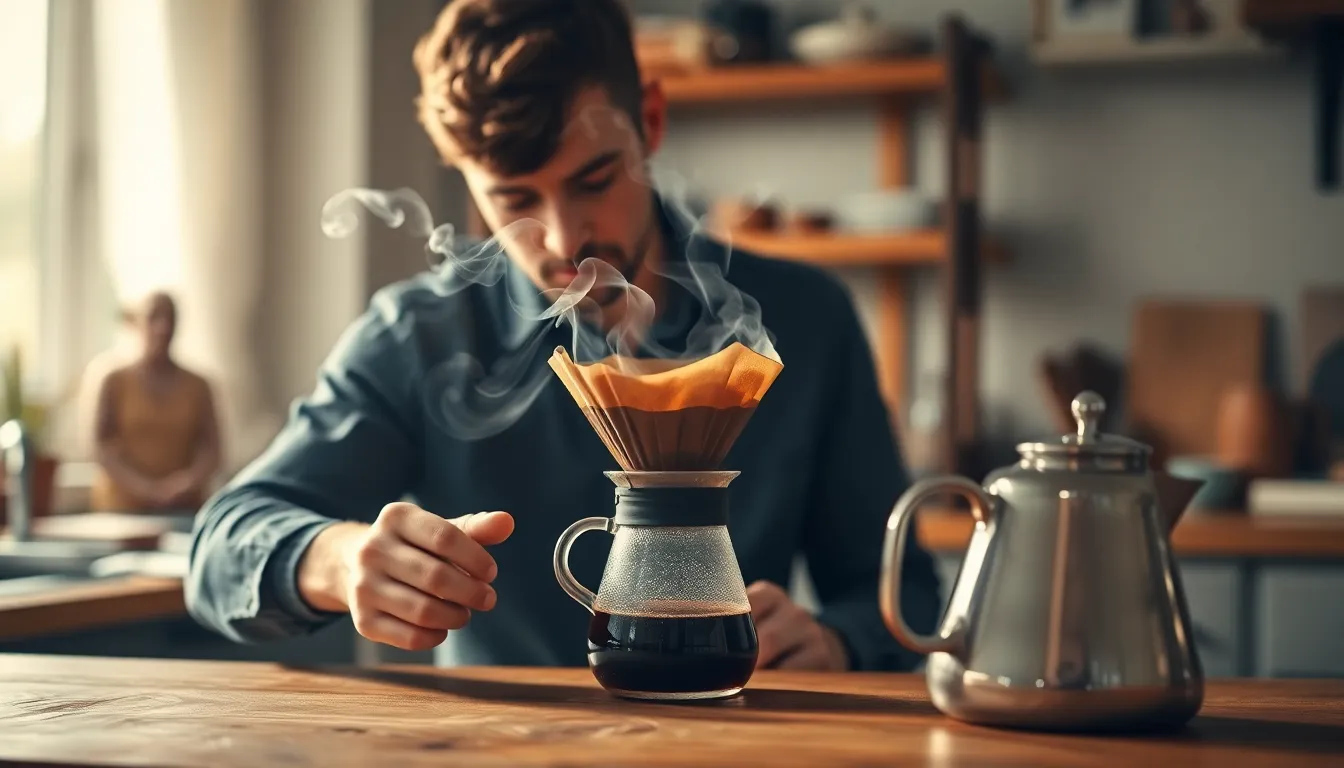
How to Brew Coffee Like a Barista at Home
That perfect cup of coffee you get at your favorite cafe doesn’t have to remain a mystery. You know the one – rich, balanced, with layers of flavor that make you close your eyes and savor every sip. The good news? You can recreate that magic right in your own kitchen.
Brewing coffee like a professional barista isn’t about expensive equipment or secret techniques. It’s about understanding the fundamentals and applying them consistently. From choosing the right beans to mastering your water temperature, every step matters. Let’s break down the essential skills that will transform your morning routine and help you create cafe-quality coffee at home.
Choose Quality Beans and Master the Grind
Your journey to barista-level coffee starts at the source – the beans themselves. Fresh, high-quality coffee beans make an enormous difference in your final cup. Look for beans that were roasted within the past two to four weeks. You’ll often find a roast date printed on specialty coffee bags, which is your best indicator of freshness.
Single-origin beans offer distinct flavor profiles that reflect their growing region. Ethiopian beans might give you bright, fruity notes, while Colombian beans often provide a balanced, nutty sweetness. Blends can offer complexity and consistency, making them perfect for daily brewing.
The grind size is where many home brewers stumble. Different brewing methods require specific grind sizes to extract flavors properly. For espresso, you need a fine grind similar to powdered sugar. Pour-over methods like V60 work best with a medium-fine grind, while French press requires a coarse grind that looks like sea salt.
Invest in a burr grinder rather than a blade grinder. Burr grinders create uniform particle sizes, which leads to even extraction. Blade grinders chop beans unevenly, creating both fine powder and large chunks that extract at different rates, resulting in bitter or sour flavors.
Grind your beans just before brewing. Pre-ground coffee loses its volatile compounds quickly, and those compounds are what give coffee its complex aromas and flavors. The difference between freshly ground and pre-ground coffee is like comparing fresh herbs to dried ones.
Master Water Temperature and Ratios
Water makes up 98% of your coffee, so its quality and temperature directly impact your final cup. Use filtered water when possible – tap water with high chlorine content or mineral levels can mask coffee’s subtle flavors or create off-tastes.
The ideal brewing temperature sits between 195°F and 205°F (90°C to 96°C). If you don’t have a thermometer, let boiling water sit for about 30 seconds after removing it from heat. This temperature range allows for optimal extraction without scorching the coffee grounds.
Coffee-to-water ratios are crucial for consistency. A good starting point is 1:15 to 1:17 – that means 1 gram of coffee for every 15-17 grams of water. For practical measurements, use about 2 tablespoons of ground coffee for every 6 ounces of water. This ratio works well for most brewing methods, though you can adjust based on your taste preferences.
🧐 Did You Know? Professional baristas often use a technique called “blooming” where they pour just enough hot water to saturate the grounds and wait 30 seconds. This releases trapped CO2 gas and allows for more even extraction during the full brew.
Timing matters just as much as temperature and ratios. Most manual brewing methods take between 3-6 minutes total. Espresso extracts in 25-30 seconds, while French press steeps for 4 minutes. These timing guidelines help ensure proper extraction – too fast and you’ll get sour, under-extracted coffee; too slow and you’ll end up with bitter, over-extracted flavors.
Keep a simple brewing log when you’re starting out. Note your coffee type, grind setting, water temperature, ratio, and timing. This helps you identify what works and replicate successful brews. Small adjustments to any of these variables can significantly change your coffee’s taste.
Perfect Your Brewing Technique
The pour-over method is where many home baristas find their groove. Start with a gooseneck kettle for precise water control. Wet your paper filter and preheat your brewing device – this removes papery tastes and ensures consistent temperature.
Pour in a slow, circular motion, starting from the center and spiraling outward. Keep your pour steady and controlled. The entire brewing process should take about 3-4 minutes for most pour-over methods. Watch how the coffee blooms and bubbles – fresh coffee will puff up significantly when you first add water.
For espresso at home, focus on your tamping technique. Apply about 30 pounds of pressure with a level tamp. The goal is creating an even, flat surface that allows water to flow through uniformly. Uneven tamping creates channels where water flows too quickly, leading to weak, sour shots.
French press brewing requires patience and proper technique. Add your coarse grounds, pour hot water to saturate them completely, and give everything a gentle stir. Place the lid on without pressing down and let it steep for exactly 4 minutes. Press the plunger down slowly and steadily – rushing this step can create bitter flavors.
Cold brew offers a completely different approach. Use a 1:4 coffee-to-water ratio with coarse grounds. Steep for 12-24 hours at room temperature or in the refrigerator. The long extraction time creates a smooth, less acidic concentrate that you can dilute with water or milk.
Fine-Tune Your Skills and Equipment
Consistency is what separates good home brewers from great ones. Use a kitchen scale to measure both coffee and water precisely. Volume measurements can vary significantly, but weight measurements ensure reproducible results every time.
Clean your equipment regularly. Coffee oils build up over time and turn rancid, affecting your brew’s taste. Clean your grinder weekly by running rice through it, followed by a thorough wipe-down. Wash your brewing devices with warm water and mild soap after each use.
Pay attention to your coffee’s bloom – that initial bubbling when you first add water. Fresh coffee will bloom vigorously, while older coffee barely reacts. This visual cue helps you assess your bean freshness and adjust your brewing accordingly.
Experiment with different brewing methods to expand your skills. Each method highlights different aspects of coffee. Pour-over methods like V60 or Chemex create clean, bright cups that showcase origin characteristics. French press produces full-bodied coffee with more oils and sediment. Espresso concentrates flavors into an intense, syrupy shot.
Consider upgrading your equipment gradually. Start with a good grinder and scale, then add specialized brewing devices as you develop preferences. A reliable grinder makes the biggest difference in cup quality, while precise measurement tools ensure consistency.
Taste everything critically. Notice how different variables affect flavor. Is your coffee too bitter? Try a coarser grind or lower water temperature. Too sour? Go finer on the grind or increase extraction time. Developing your palate takes practice, but it’s the most valuable skill you can build.
Conclusion
Brewing coffee like a barista isn’t about perfection – it’s about understanding the fundamentals and applying them thoughtfully. Every cup is an opportunity to practice and improve. Start with quality beans, master your grind size, control your water temperature, and maintain consistent ratios.
The beauty of home brewing lies in the process itself. There’s something meditative about the morning ritual of grinding beans, heating water, and carefully pouring. You’re not just making coffee; you’re creating a moment of mindfulness before your day begins.
Remember that even professional baristas are constantly learning and adjusting. Your taste preferences will evolve, and seasonal changes in beans will require small modifications to your technique. Embrace this journey of discovery. With practice and attention to detail, you’ll soon be brewing coffee that rivals your favorite cafe – and maybe even surpasses it.
What’s the most important factor in brewing great coffee at home?
Fresh, quality beans and proper grind size are the foundation. Without good beans ground correctly for your brewing method, even perfect technique won’t save your cup. Invest in whole beans roasted within 2-4 weeks and a burr grinder.
How long should I brew my coffee?
Brewing time varies by method: espresso takes 25-30 seconds, pour-over methods need 3-4 minutes, and French press requires exactly 4 minutes of steeping. Timing affects extraction – too short yields sour coffee, too long creates bitterness.
What water temperature should I use for brewing coffee?
Aim for 195°F to 205°F (90°C to 96°C). If you don’t have a thermometer, let boiling water sit for 30 seconds after removing from heat. This temperature range allows optimal extraction without burning the grounds.
How much coffee should I use per cup?
Use a 1:15 to 1:17 coffee-to-water ratio by weight. For practical measurements, that’s about 2 tablespoons of ground coffee for every 6 ounces of water. Adjust based on your taste preferences, but start with these ratios for consistency.
Do I really need expensive equipment to make good coffee?
Not necessarily. A burr grinder and kitchen scale are your most important investments. You can make excellent coffee with simple methods like pour-over or French press. Focus on technique and quality beans rather than expensive gadgets initially.