
10 Places You Must Visit Before They Disappear
The world is changing faster than ever. Rising sea levels, climate shifts, urban sprawl, and overtourism are reshaping our planet's most beautiful and culturally significant destinations. Some of these places might vanish entirely within our lifetime - not in the dramatic sense of vanishing from maps, but in losing the qualities that make them extraordinary. The question isn't whether you can afford to travel. It's whether you can afford not to. Visiting these endangered destinations while they still exist isn't just about collecting passport stamps. It's about bearing witness to human heritage and natural wonders before they transform forever. This guide highlights 10 critical places that deserve your attention - and your footsteps - sooner rather than later.
Island Nations Facing Rising Seas
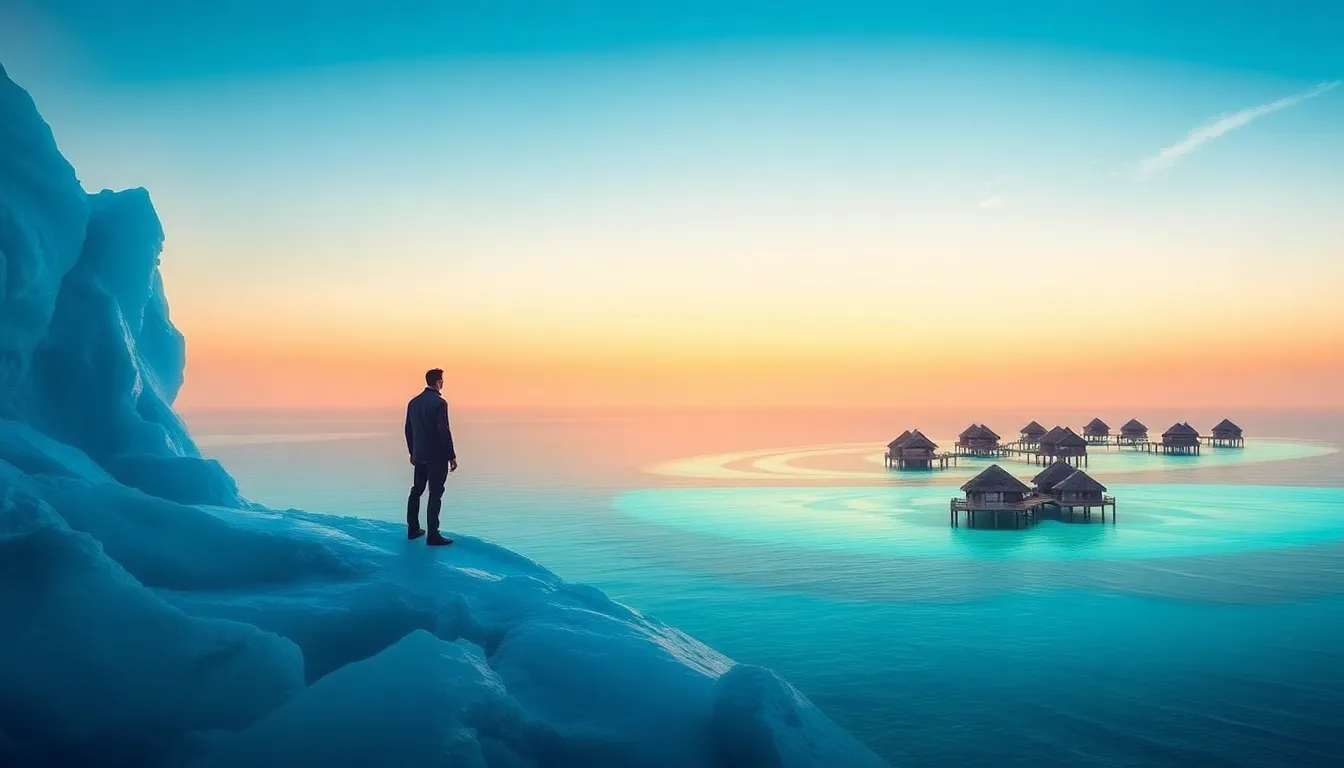
Let's start with the most urgent threat. The Maldives, Tuvalu, and Kiribati are literally sinking. We're not talking about distant future scenarios - these nations are implementing relocation plans right now. The Maldives, famous for its crystalline waters and overwater bungalows, sits just 1.5 meters above sea level. By 2050, large portions could be underwater.
Tuvalu, a collection of nine coral atolls in the South Pacific, represents something more precious than luxury resorts. It's an entire nation facing extinction. The government has even sold internet domain naming rights (.tv) to fund climate adaptation efforts. Walking through the capital of Funafuti, you see a vibrant culture - colorful fishing boats, traditional architecture, warm communities - that might only exist in photographs within decades.
Kiribati tells a similar story. Its residents have already started negotiations with other nations to become climate refugees. These places aren't abstract climate statistics. They're home to real people with deep cultural roots, distinct languages, and ways of life that can't be replicated elsewhere. Visiting means learning their stories directly, supporting local economies, and carrying their narratives back to your own community. You become a witness to history in real time.
The experience differs drastically from typical beach vacations. Yes, you'll find stunning atolls and pristine reefs. But you'll also encounter the sobering reality of climate change - locals discussing their futures with urgency, adaptation infrastructure being built, and the weight of knowing time is running short.
Venice and Sinking European Cities
Venice doesn't need introduction. This UNESCO World Heritage site has captivated travelers for centuries. Yet the "Floating City" is subsiding at an alarming rate. Parts of Venice sink approximately 1-2 millimeters per year. High-water flooding, known locally as "acqua alta," now happens regularly instead of rarely. In 2019, Venice experienced catastrophic flooding that submerged historic squares and damaged countless buildings.
The infrastructure damage extends beyond surface-level concerns. Foundations are weakening. The salt water erodes building materials. Restoration costs skyrocket as deterioration accelerates. Local families are leaving - Venice's population has dropped from 175,000 in 1951 to around 50,000 today. Some experts predict the city could become uninhabitable within the next century.
🧐 Did You Know? Venice's famous Grand Canal is 3.8 kilometers long and requires constant maintenance costing millions annually. The MOSE flood barrier, designed to protect the city, took 17 years to complete and nearly 5 billion euros to build.
Planning a Venice visit now means experiencing it in its current form - imperfect, crowded, but still fundamentally intact. The canals still reflect centuries-old architecture. You can still walk where Marco Polo walked. The question is: for how much longer?
Glaciers and Polar Regions Vanishing at Record Speeds
The Alps' glaciers are disappearing. Glacier National Park in Montana has lost 95 percent of its namesake glaciers since 1850. The situation in the Arctic and Antarctic grows more critical yearly. These regions represent some of Earth's last pristine wilderness - yet they're melting before our eyes.
Visiting glacier regions isn't just about scenic photographs, though those matter. It's about understanding the planetary systems that sustain all life. Trekking to Patagonia's Perito Moreno Glacier, exploring Iceland's ice formations, or visiting the Alps connects you physically with climate realities. You see retreating glaciers firsthand. You understand the scale of change.
The Arctic and Antarctic offer extreme travel experiences that few people undertake. Polar expeditions are expensive and demanding - but they're also transformative. Standing on pack ice, witnessing aurora borealis or aurora australis, observing wildlife adapted to extreme conditions - these experiences reshape how you understand humanity's place in the natural world.
The urgency here combines beauty with education. Scientists predict many Alpine glaciers could disappear entirely within 50 years. The Arctic ice pack continues shrinking. Window closing means now is genuinely the right time to plan these journeys.
Coral Reefs Under Extreme Stress
The Great Barrier Reef, Australia's iconic wonder, has experienced unprecedented bleaching events in recent years. Coral bleaching - where corals expel symbiotic algae due to temperature stress - leaves reefs white and dying. The 2016 and 2017 bleaching events damaged vast sections of the reef system. While some recovery occurred, the repeated stress damages long-term viability.
Snorkeling or diving the Great Barrier Reef remains possible and worthwhile, but the window narrows. The reef you see today might look significantly different in 10 years. Other reef systems face similar pressures - the Maldives, the Philippines, the Caribbean. These ecosystems support billions of people and trillions of dollars in economic value. They're also irreplaceably beautiful.
Diving healthy reefs creates powerful emotional connections to ocean conservation. Seeing the biodiversity - tropical fish, sea turtles, sharks, and countless invertebrates living in symbiosis - makes climate change and ocean acidification feel real and personal. Reef conservation isn't abstract policy. It's about protecting specific places you've actually experienced.
Cultural Sites Threatened by Conflict and Development
Palmyra in Syria, Angkor Wat in Cambodia, and countless archaeological sites face threats from conflict, looting, and deterioration. Some places, like the ancient city of Aleppo in Syria, have already been severely damaged during warfare. Others exist in politically unstable regions where access becomes impossible without proper planning.
These sites represent irreplaceable human history. They connect us to ancestors, to previous civilizations, to the continuity of human experience across millennia. Losing them means losing chapters of our shared story.
Visiting contested or politically sensitive sites requires careful research, proper planning, and deep respect. Sometimes it means supporting local guides and businesses that preserve cultural heritage despite difficult circumstances. Your presence and your economic support can matter significantly in communities working to maintain their heritage.
Rainforests and Biodiversity Hotspots Disappearing
The Amazon rainforest continues shrinking due to deforestation. Southeast Asian rainforests are cleared for agriculture. These ecosystems contain species we haven't even discovered yet. We lose biodiversity daily. Visiting rainforest regions - whether the Amazon, Costa Rica's cloud forests, or Borneo's jungles - means supporting conservation economics and understanding why these ecosystems matter.
Rainforest experiences transform perspectives. Walking through ancient forests, learning from indigenous guides, understanding complex ecological relationships - these aren't vacation activities. They're educational experiences that shape your understanding of planetary systems and human responsibility.
Making These Journeys Matter
Visiting endangered places carries responsibility. Mass tourism can accelerate deterioration through direct physical damage and environmental stress. The most ethical approach involves careful planning - using local guides, staying in community-based accommodations, minimizing environmental footprints, and genuinely engaging with places rather than simply photographing them.
Consider traveling during shoulder seasons when fewer tourists visit. Support conservation organizations actively protecting these destinations. Educate yourself before visiting so you understand the ecological and cultural context. Share what you learn, turning personal experience into advocacy for protection and preservation.
These 10 places matter because they represent irreplaceable parts of human and natural heritage. They inspire us, teach us, and connect us to larger planetary systems. Visiting them while they still exist - in their current forms - transforms how we understand our world and our responsibilities within it. The time to go isn't someday. It's now.
FAQ: Are These Places Truly at Risk?
Yes. Scientific consensus confirms that rising sea levels, climate change, and environmental degradation threaten all these destinations. Government agencies and UNESCO have documented the risks. This isn't speculation - it's based on decades of research and observable change.
FAQ: Is Visiting These Places Ethical?
Thoughtful visitation can be ethical and beneficial. Choose local operators, minimize environmental impact, and stay longer in fewer places rather than rushing through. Your spending supports conservation efforts and creates economic incentive to protect heritage. The key is traveling responsibly.
FAQ: How Expensive Are These Trips?
Costs vary dramatically. Visiting Venice costs less than glacier expeditions. Southeast Asian rainforest trips offer good value. Polar expeditions are expensive. Budget planning matters, but don't let cost deter you - many of these destinations offer affordable options for travelers willing to research alternatives.
FAQ: What's the Best Time to Visit These Places?
Timing depends on specific destinations. Research local climate patterns, seasons, and current conditions for each place. Generally, visiting during shoulder seasons reduces environmental stress and crowds while providing excellent experiences.
FAQ: Can Individual Travel Impact Conservation?
Yes. Tourist spending supports local conservation efforts. Your presence raises awareness and political will to protect destinations. Personal experience creates advocates who return home and influence others. Individual choices, multiplied across millions of travelers, genuinely move conservation priorities.