
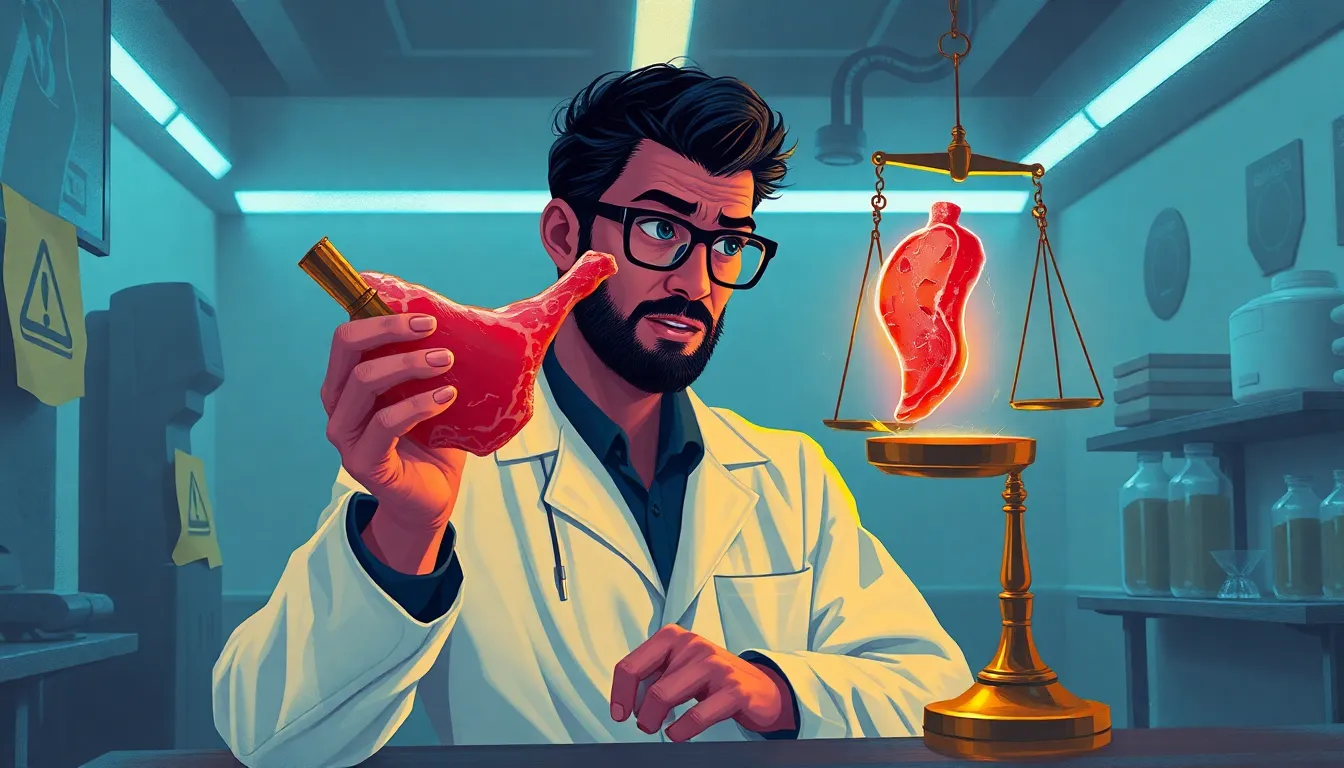
Lab-Grown Meat: Delicious or Dystopian?
The future of meat is… growing in a lab? It sounds like something straight out of science fiction, but lab-grown meat (also called cultured meat or cell-based meat) isn’t fiction anymore. Scientists are literally growing animal cells in controlled environments to create meat without raising and slaughtering animals. This technology has sparked intense debates among environmentalists, animal rights activists, traditional farmers, and consumers alike. Some view it as the solution to factory farming’s problems, while others worry it’s an unnatural step too far. The question on everyone’s minds: is this stuff actually good for us and our planet, or are we heading toward a food dystopia?
Lab-grown meat sits at a fascinating intersection of ethics, technology, science, and culture. And honestly? The answers aren’t simple. Let’s dig into what this technology actually is, why people are excited about it, and why others are concerned that we might be making a huge mistake.
What Is Lab-Grown Meat and How Is It Made?
Lab-grown meat isn’t some kind of weird plant-based substitute – it’s actual animal tissue. The process starts with collecting a small sample of animal cells, usually through a biopsy (which doesn’t harm the animal). These cells are then placed in a nutrient-rich medium inside a bioreactor – basically a controlled environment where the cells can multiply and differentiate, just like they would inside an animal’s body.
The cells grow and multiply in this broth of nutrients, which typically contains amino acids, sugars, salts, and growth factors. As they develop, they’re shaped using scaffolding structures to form recognizable meat textures. The final product is actual animal muscle tissue – real meat, genetically identical to conventional meat, but produced without raising and slaughtering animals.
The first lab-grown hamburger was created in 2013 by Dutch scientist Mark Post and cost a whopping $330,000 to produce. Fast forward to today, and companies like Upside Foods, GOOD Meat, and others have dramatically reduced costs while improving flavor and texture. In 2023, the FDA and USDA granted approval for the first lab-grown chicken products in the United States, marking a major milestone for this emerging industry.
🧐
Did You Know? Winston Churchill actually predicted lab-grown meat back in 1931. In his essay “Fifty Years Hence,” he wrote: “We shall escape the absurdity of growing a whole chicken in order to eat the breast or wing, by growing these parts separately under a suitable medium.”
The Potential Benefits: Why Some Are Excited
The enthusiasm around lab-grown meat isn’t just tech-for-tech’s-sake – there are some pretty compelling potential benefits that have people excited about this technology.
First up: environmental impact. Traditional animal agriculture is rough on our planet. It accounts for about 14.5% of global greenhouse gas emissions according to the FAO, uses massive amounts of land and water, and contributes to deforestation and water pollution. Early research suggests lab-grown meat could reduce land use by up to 95%, water use by up to 96%, and greenhouse gas emissions by up to 80% compared to conventional meat production. That’s a big deal in a world facing climate change.
Then there’s animal welfare. Around 80 billion animals are slaughtered annually for meat worldwide. Lab-grown meat could dramatically reduce this number since it only requires taking cells from animals without harming them. For people who are morally troubled by animal slaughter but still want to eat meat, this technology offers a potential middle ground.
There are potential health benefits too. Without animals raised in confined spaces, there’s less need for antibiotics, reducing the risk of antibiotic resistance. Lab-grown meat can also be engineered to have better nutritional profiles – perhaps with less saturated fat and more omega-3 fatty acids. And without the risk of fecal contamination that comes with slaughterhouses, food safety could improve.
🧐
Did You Know? The growth medium used to cultivate lab-grown meat cells has traditionally relied on fetal bovine serum (FBS) – blood taken from calf fetuses. However, most companies have now developed animal-free alternatives to avoid this ethically problematic ingredient.
The Concerns: Why Some Are Worried
Not everyone’s ready to embrace lab-grown meat, and the concerns aren’t just knee-jerk reactions to new technology. There are legitimate questions that deserve serious consideration.
The “naturalness” question comes up a lot. Many people feel uncomfortable with food created in labs rather than on farms. There’s something intuitively appealing about traditional agriculture that connects us to our food heritage and to natural cycles. Is something lost when we move meat production from fields to factories? This isn’t just nostalgia – our relationship with food is deeply cultural and emotional.
The health implications remain somewhat uncertain. While lab-grown meat should theoretically be safe, we don’t have long-term studies on its consumption. Some researchers question whether the cellular processes in bioreactors perfectly mimic those in animals, potentially leading to subtle but important differences in nutritional content or cellular structure.
Then there’s the economic impact. Traditional animal agriculture employs millions worldwide. A shift to lab-grown meat could disrupt these livelihoods, particularly in rural communities that depend on farming. Will the new jobs created by cellular agriculture benefit the same communities? Or will wealth and control become even more concentrated in technology companies?
And finally, some critics worry about corporate control. The technology behind lab-grown meat is being heavily patented. Could this lead to a handful of corporations controlling our meat supply? Traditional farmers, whatever their flaws, are numerous and diverse. What happens when meat production requires high-tech facilities and proprietary methods owned by a few companies?
The Reality Check: Where We Actually Are
Despite the hype and headlines, lab-grown meat is still in its early stages. Yes, it’s now legally available in the US and Singapore, but in extremely limited quantities and at high prices. We’re years away from seeing it compete with conventional meat on cost.
Current production methods still face significant challenges. Scaling up bioreactors to industrial size isn’t simple. The nutrient medium remains expensive. Creating complex meat structures like steaks (rather than ground meat products) is technically difficult. And the energy requirements for maintaining sterile growth environments are substantial.
The initial environmental promises might be overstated too. While the potential is there, current production methods are energy-intensive. A 2019 study in the journal Frontiers in Sustainable Food Systems suggested that depending on the energy sources used, lab-grown meat could potentially generate more greenhouse gas emissions than some forms of conventional meat production if production is powered by fossil fuels rather than clean energy.
Consumer acceptance remains a huge hurdle. Surveys consistently show mixed feelings about lab-grown meat, with many people expressing skepticism or disgust. Changing food preferences is notoriously difficult – we don’t just eat for nutrition; we eat for tradition, identity, pleasure, and connection.
The regulatory landscape is still developing too. While the US has created an approval pathway, many countries haven’t yet determined how they’ll regulate these products. Questions about labeling, safety testing, and production standards are still being worked out globally.
Finding a Balanced Perspective
So where does this leave us? Is lab-grown meat delicious or dystopian? Well, it’s probably neither – at least not yet. Like most technological developments, the reality is likely to be messier and more nuanced than either the utopian or dystopian visions.
Lab-grown meat represents one potential tool in addressing real problems with our food system. But it’s not a silver bullet. We’ll likely need multiple approaches – including plant-based alternatives, regenerative agriculture practices, and yes, perhaps cultured meat – to create a more sustainable and humane food system.
What’s clear is that our current industrial meat system has serious problems. The question isn’t whether we need changes, but what kind of changes will create the food future we want. That requires thinking not just about technology but about values – what matters to us about our food? Nutrition, environmental impact, animal welfare, tradition, taste, accessibility, and fairness are all part of this complex equation.
Conclusion
Lab-grown meat sits at a fascinating crossroads of science, ethics, and culture. It’s neither the dystopian nightmare some fear nor the perfect solution others hope for. It’s a technology with potential benefits and genuine drawbacks, developing in a world that desperately needs better food solutions but is understandably cautious about radical changes to something as fundamental as how we produce meat.
The conversation about lab-grown meat isn’t really about the technology itself – it’s about what kind of food system we want and what values should guide it. Do we prioritize technological efficiency or traditional knowledge? Environmental metrics or cultural continuity? Global solutions or local resilience?
As consumers, citizens, and eaters, we have a voice in this conversation. The future of meat isn’t predetermined by technology – it will be shaped by our collective choices, regulations, and cultural responses. Whether lab-grown meat becomes a niche product, a major food source, or a technological dead-end depends not just on scientific progress but on how we navigate these complex questions about food, nature, and what it means to eat well in the 21st century.
Frequently Asked Questions
Is lab-grown meat vegan or vegetarian?
Lab-grown meat isn’t technically vegan or vegetarian since it’s made from animal cells and is biologically animal tissue. However, it doesn’t require animal slaughter (after the initial cell collection), which addresses a key ethical concern for many vegetarians. Some vegetarians might consider it acceptable, while others might not. Many vegans would likely avoid it as it still uses animal cells, though some might view it as causing less harm than conventional meat. Ultimately, it’s a personal decision based on individual values and reasons for following plant-based diets.
How does lab-grown meat taste compared to conventional meat?
Early versions of lab-grown meat were reported to taste somewhat bland or have unusual textures. However, companies have made significant improvements in recent years. Journalists and food critics who have tasted the newest versions report that simple products like chicken nuggets or ground meat are becoming nearly indistinguishable from conventional meat in taste and texture. Complex cuts like steaks remain challenging to replicate. The companies producing these products are continually working on improving flavor, texture, and mouthfeel to match consumer expectations.
When will lab-grown meat be widely available and affordable?
While lab-grown meat has received regulatory approval in the US and Singapore, widespread availability and affordability remain years away. Current production costs have dropped dramatically but are still higher than conventional meat. Most industry experts predict that lab-grown meat products might reach price parity with premium conventional meat products in 5-10 years, with mass-market affordability potentially taking longer. The timeline depends on technological improvements, scaling up production, regulatory approvals across more countries, and consumer acceptance. Initial availability will likely be in high-end restaurants before expanding to retail markets.