
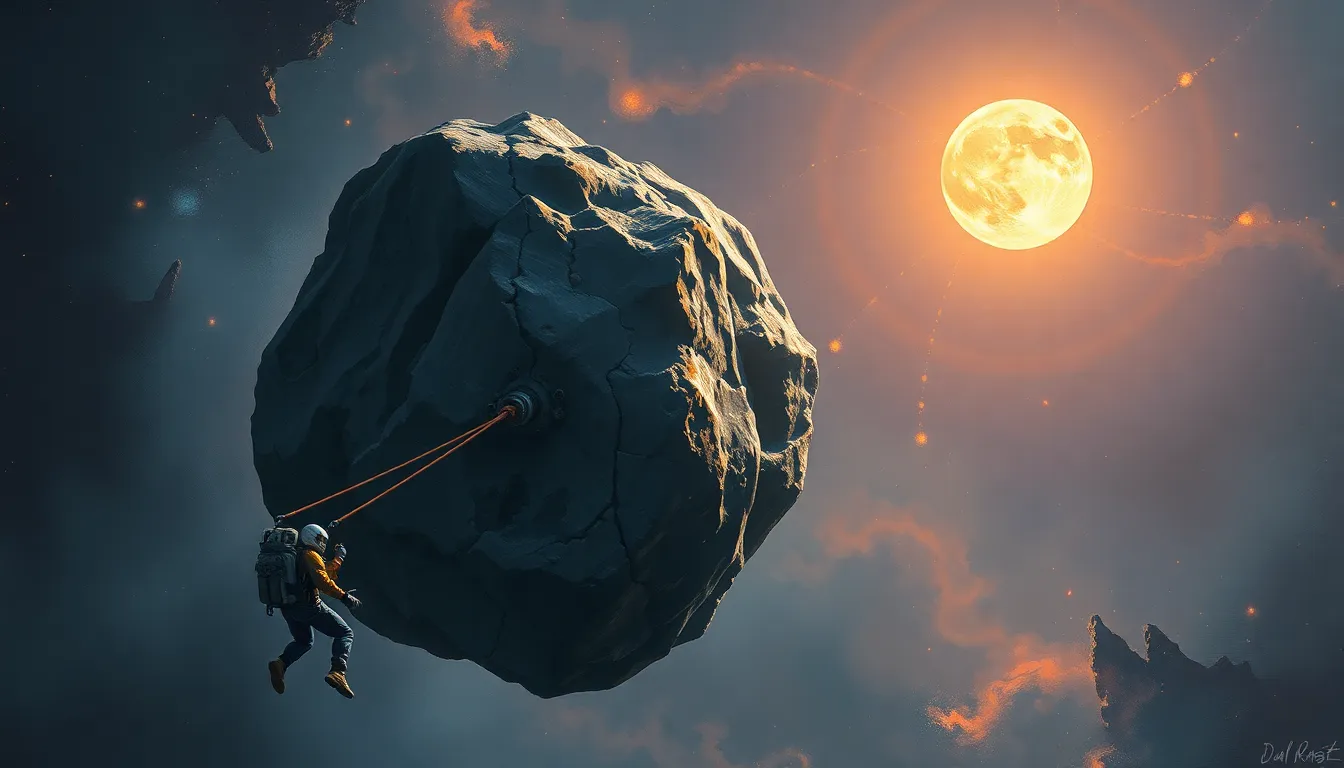
The universe has always held mysteries and riches beyond our wildest dreams. For centuries, humanity looked to Earth's crust for precious metals, digging deeper and wider to extract gold, platinum, and rare minerals. But what if the next great frontier for resource extraction isn't beneath our feet, but floating in the void above our heads? Asteroid mining is no longer just science fiction. With advancing technology and growing interest from both governments and private companies, we're standing at the threshold of what could become the most lucrative industry in human history. The question isn't whether we can mine asteroids, but when we'll start.
Why Asteroids Are Treasure Troves in Space
Asteroids contain some of the most valuable materials known to civilization. These rocky remnants from the early solar system are packed with platinum, gold, nickel, cobalt, and iron. Unlike Earth, where heavy metals sank to the core during planetary formation, asteroids never underwent that process. Their resources remain accessible, concentrated in ways that make terrestrial mines look modest by comparison.
Take 16 Psyche, a metallic asteroid orbiting between Mars and Jupiter. Scientists believe this single asteroid contains approximately 1.7x10^19 kilograms of nickel-iron. To put that in perspective, that's enough to satisfy global production requirements for several million years. Platinum-rich asteroids can contain ore grades up to 100 grams per ton, which is 10 to 20 times higher than what you'd find in open-pit platinum mines on Earth.
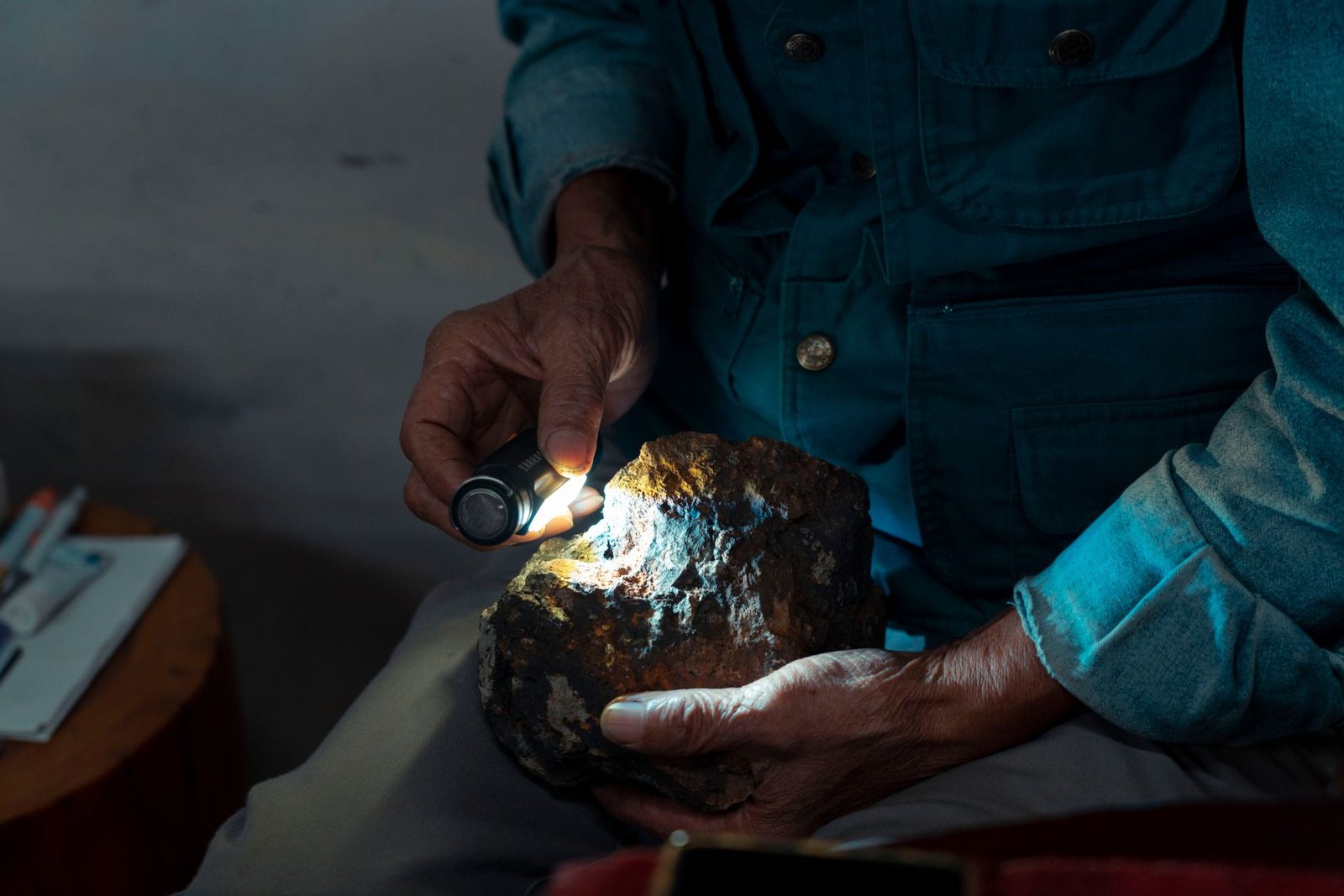
Water ice is another critical resource found on many asteroids. While it might not sound as exciting as precious metals, water in space is extraordinarily valuable. It can be consumed by astronauts, support life systems on space stations, or be split into hydrogen and oxygen for rocket fuel. This makes asteroids potential refueling stations for deep space missions, eliminating the need to carry all propellant from Earth.
The Economics Make Sense, Eventually
The promise of asteroid mining sounds incredible on paper, but the economics tell a more complex story. Getting to an asteroid, setting up mining equipment, and returning materials to Earth requires enormous upfront investment. Current estimates suggest that a single asteroid mining mission could cost billions of dollars. For comparison, that's more than most mining companies spend developing a new site on Earth.
🧐 Did You Know? The low gravity of asteroids makes them surprisingly attractive for mining operations. Because there's no deep gravity well to escape, extracted materials can be launched back toward Earth or other destinations with minimal energy compared to lifting resources from a planetary surface.
However, the long-term economics could be transformative. Once the infrastructure is in place, mining asteroids becomes increasingly profitable. The materials don't need to be brought back to Earth to have value. Processing metals in space and using them to build satellites, space stations, or spacecraft eliminates the massive cost of launching raw materials from Earth's surface. When you consider that it costs thousands of dollars to launch a single kilogram into orbit, manufacturing in space with asteroid materials starts looking brilliant.
Some experts argue that the first profitable asteroid mining won't target precious metals at all. Instead, starting with impact sites on the moon might prove more practical. The moon's surface is dotted with asteroid debris from ancient impacts, offering easier access to similar resources without traveling to the asteroid belt.
Technology Gaps We Still Need to Close
We've sent probes to asteroids, taken samples, and returned them to Earth. The Japan Aerospace Exploration Agency's Hayabusa missions and NASA's OSIRIS-REx have proven we can touch asteroids and bring pieces home. But touching and mining are vastly different endeavors. Large-scale extraction requires autonomous robotics, processing facilities, transportation systems, and more, all operating in environments that would destroy most Earth-based equipment.
Radiation poses a constant threat. Without Earth's magnetic field and atmosphere, electronics and human workers face bombardment from cosmic rays and solar radiation. Mining equipment needs to function in extreme temperature swings, from scorching heat when facing the sun to frigid cold in shadow. There's no atmosphere to transmit heat, no water for cooling, and repairs can't happen with a quick service call.
Autonomous operation is critical. The distance from Earth means communication delays make real-time control impossible. Commands sent to the asteroid belt take minutes to arrive, so mining robots need to make decisions independently. Current technology isn't quite there yet, though advances in AI and machine learning are closing the gap rapidly.
Then there's the challenge of actually extracting and processing materials in microgravity. Drilling into an asteroid might cause it to spin unpredictably. Separating valuable minerals from worthless rock requires techniques completely different from terrestrial mining. We're developing these methods, but they remain largely theoretical until tested in real conditions.
Who's Racing Toward the First Strike?
The asteroid mining race includes both government space agencies and ambitious private companies. NASA and other national space programs view asteroid resources as essential for long-term space exploration. Their missions focus on scientific study and technology demonstration rather than immediate profit. NASA's plan to visit 16 Psyche, launching a probe to orbit this metal-rich asteroid, will provide crucial data about what mining such an object might entail.
Private companies are thinking bigger and moving faster. Several startups have announced plans to mine asteroids within the next few decades, though timelines tend to slip as technical realities become clearer. Private companies are increasingly entering the space race, attracted by the potential for enormous returns.
Luxembourg has positioned itself as the asteroid mining capital of Earth, offering legal frameworks and investment to companies pursuing space resources. The tiny European nation passed laws recognizing property rights for materials extracted from asteroids, creating regulatory clarity that larger countries haven't matched. Several asteroid mining companies have established headquarters there as a result.
China's space program has also expressed interest in asteroid resources as part of its broader space ambitions. As they develop capabilities for lunar mining and deep space exploration, asteroids represent a natural next step. The race is international, competitive, and just beginning.
Conclusion
Asteroid mining represents one of humanity's most audacious dreams, blending cutting-edge technology with age-old desires for wealth and exploration. The resources floating in our solar system could reshape economics, enable permanent human presence in space, and provide materials for technologies we haven't yet imagined. The technical challenges are substantial, and the timeline for profitability remains uncertain, but progress continues steadily.
We're not quite ready to stake claims in the asteroid belt tomorrow. The technology needs more development, the economics need infrastructure, and the legal frameworks need international agreement. But every successful sample return mission, every advance in autonomous robotics, and every dollar invested brings the vision closer to reality. We may be closer to mining metals from asteroids than most people realize. The next gold rush won't happen in California or the Yukon. It will happen in the infinite expanse above us, where fortunes await those bold enough to reach for them.
FAQs
When will asteroid mining actually start?
Small-scale demonstration missions could happen within the next decade, but large-scale commercial mining likely won't begin until the 2030s or 2040s. The technology is advancing rapidly, but the infrastructure and economics still need time to develop. Early missions will focus on proving concepts and testing equipment rather than generating immediate profits.
Would bringing asteroid metals to Earth crash the platinum and gold markets?
Most experts believe the first asteroid mining operations will use materials in space rather than bringing them to Earth. Manufacturing satellites, spacecraft, and space stations with asteroid metals would create enormous value without flooding terrestrial markets. Even if materials eventually come to Earth, the process would likely be gradual enough for markets to adjust rather than collapse suddenly.
Who owns asteroids and their resources?
International space law is evolving on this question. The Outer Space Treaty of 1967 prevents nations from claiming sovereignty over celestial bodies, but it's less clear about private extraction of resources. Several countries, including the United States and Luxembourg, have passed national laws allowing their citizens and companies to own materials extracted from asteroids, though international consensus remains incomplete.
What asteroids are the best targets for mining?
Near-Earth asteroids are the most practical first targets because they require less energy to reach than the main asteroid belt. Within this group, metallic asteroids rich in platinum-group metals and carbonaceous asteroids containing water ice are particularly valuable. Scientists have identified thousands of potentially accessible asteroids, though detailed surveys are needed to confirm their composition.
Could asteroid mining help solve resource shortages on Earth?
Eventually, yes, though not immediately. Rare metals like platinum and cobalt are essential for electronics, batteries, and green energy technologies. As Earth's supplies become harder to access and more expensive to extract, space resources could provide alternatives. The environmental benefits are also significant, since mining in space produces no terrestrial pollution, habitat destruction, or carbon emissions from heavy machinery.