
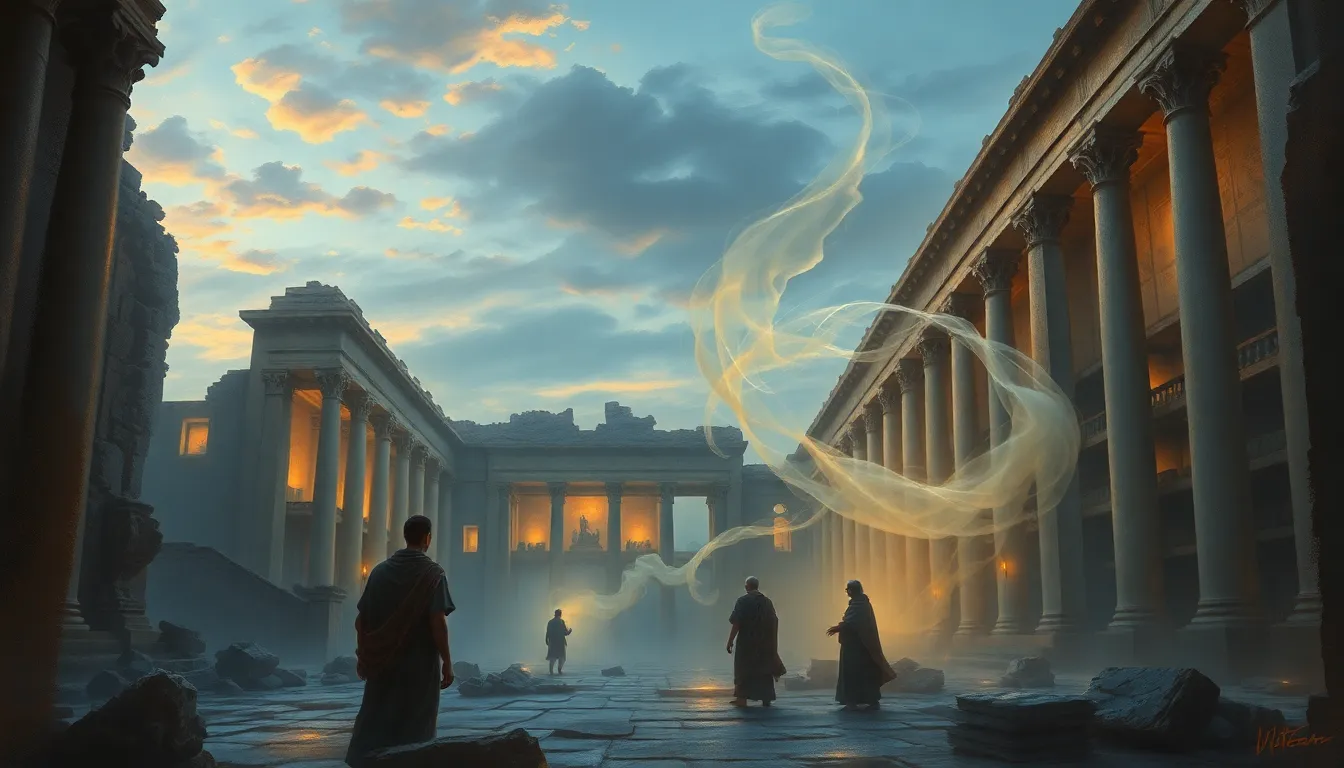
Imagine a single building holding the sum of human knowledge - every scroll, every discovery, every philosophical debate of the ancient world collected under one roof. That was the ambition of the Library of Alexandria. For centuries, it stood as the intellectual heart of the Mediterranean, drawing scholars from across the known world. But its gradual destruction over time didn't just claim a building. It erased countless works we'll never recover, leaving us to wonder what breakthroughs, stories, and ideas vanished with those papyrus scrolls.
The question isn't just about what burned or crumbled away. It's about understanding the scope of what humanity lost and why it still matters today. The Library of Alexandria wasn't destroyed in a single dramatic fire - it declined slowly through political upheaval, neglect, and multiple damaging events. What makes this loss so profound is that many of the works housed there existed nowhere else.
The Scale of Alexandria's Collection
The library's founders didn't think small. Their stated mission was to collect every book in the world, and they came remarkably close. At its peak, the library held between 40,000 and 700,000 papyrus scrolls, though scholars debate the exact number. That range tells you something about the challenge of reconstructing what was there.

The Ptolemaic rulers who founded the library used aggressive acquisition methods. Ships docking in Alexandria's harbor had their books confiscated, copied by scribes, and the copies - not the originals - returned to their owners. The originals went straight to the library's shelves. They borrowed official scrolls from Athens under enormous financial bonds, kept the originals, sent back copies, and forfeited the money without hesitation.
Above the shelves hung an inscription declaring the library "The place of the cure of the soul." It wasn't just storage - it was a research institution. Scholars lived there, debated there, and pushed the boundaries of what humanity understood about the world. The mathematician Eratosthenes calculated Earth's circumference with remarkable accuracy while working at Alexandria. Callimachus created the first library catalog, organizing knowledge in ways we still use today.
🧐 Did You Know? Ships arriving at Alexandria's port were required by law to surrender any books on board. The library would copy them and return the copies to the owners while keeping the originals - one of history's most ambitious book acquisition programs.
What Specific Works Disappeared
The painful truth is that we often know a work existed only because someone else mentioned it. Ancient authors referenced plays, histories, and scientific treatises that we'll never read. The Athenian playwright Sophocles wrote over 120 plays. Only seven survive in full, and none of those lost works are confirmed to have perished specifically at Alexandria - but the library certainly held texts that existed nowhere else.
We lost most of the works of the mathematician and inventor Archimedes. We have fragments, references, and a few texts that survived through medieval copies, but numerous commentaries and analyses by later scholars were likely unique to Alexandria. The same applies to countless philosophical works, alternative versions of well-known texts, and entire genres we barely remember.
Consider the sheer volume of astronomical and mathematical knowledge. The ancient world achieved calculations and observations we're only now fully appreciating. Many of those findings lived in single copies or in annotated versions held by Alexandria's scholars. When those scrolls degraded or burned, we didn't just lose the conclusions - we lost the methodology, the debates, the wrong turns that eventually led to breakthrough moments.
The library also held extensive works on ancient religions, alternative historical accounts, and literature from cultures we know little about today. Egyptian priestly texts, Persian chronicles, Indian scientific treatises - all filtered through Alexandria as the crossroads of the ancient world. Many never made it into later collections preserved by Islamic or Christian scholars.
How the Library Actually Declined
Popular imagination loves the idea of a single catastrophic fire consuming everything overnight. Reality was messier and sadder. The library's destruction happened gradually across centuries, with different incidents damaging different parts of the collection.
Julius Caesar's military campaign in 48 BCE caused fires that damaged part of the library's holdings, though the main collection likely survived. Later, in the third century CE, Emperor Aurelian's forces damaged much of Alexandria's royal quarter where the library stood. Political and religious conflicts in the fourth and fifth centuries led to the destruction of the Serapeum, a daughter library that housed many scrolls.
What really killed the library wasn't dramatic violence - it was neglect and shifting priorities. As funding dried up, fewer scholars came. Scrolls degraded without proper care. Papyrus doesn't last forever, especially in a humid climate. Each scroll required constant copying and maintenance. When that work stopped, the collection began its slow fade into history.
By the time Arab forces conquered Alexandria in the seventh century, the great library was already long gone. The often-repeated story of the Arab general burning the scrolls to heat bathhouses is almost certainly fictional, invented centuries after the fact. The real tragedy had already happened through mundane neglect, not dramatic villainy.
Why It Still Matters Today
You might think ancient scrolls have little relevance to our digital age. But the loss of Alexandria carries lessons about how fragile knowledge really is. We assume that important information survives, that multiple copies exist, that someone somewhere preserved what matters. Alexandria proves that assumption wrong.
The lost works likely contained scientific advances that took humanity centuries to rediscover. Medical texts describing treatments we had to figure out again. Mathematical proofs that could have accelerated later discoveries. Historical accounts that would reshape our understanding of ancient civilizations. We can't know the full impact because we don't know what's missing.
Modern digitization seems like an answer, but it creates new vulnerabilities. File formats become obsolete. Storage media degrades. Companies go bankrupt and take their data with them. The Internet Archive has faced multiple threats. We have more knowledge stored than ever before, but it's concentrated in systems that could fail catastrophically.
Alexandria also reminds us that knowledge preservation requires active effort and resources. Libraries and archives need funding, staff, and political protection. The decision to maintain or abandon these institutions shapes what future generations will know about us. In that sense, we face the same choice the later Ptolemies faced - whether to invest in preserving knowledge or let it quietly disappear.
Conclusion
The Library of Alexandria didn't just hold old books. It represented a moment when humanity tried to gather everything known and make it accessible to those curious enough to seek it. Its destruction - slow, preventable, and tragically human - cut threads of knowledge we'll never fully reconnect. We know enough about what was lost to understand the scope of the tragedy, but not enough to recover what vanished.
What hurts most isn't the famous works that disappeared. Most major philosophical and scientific texts had copies elsewhere. It's the lesser-known works, the commentaries, the alternative perspectives, the voices from cultures that left few other traces. Those are gone completely. The library taught us that knowledge is more fragile than we think, that preservation requires constant work, and that once something is truly lost, all we're left with is the ache of knowing it once existed.
FAQs
Was the Library of Alexandria really destroyed by fire?
No single fire destroyed the Library of Alexandria. While Julius Caesar's military campaign in 48 BCE caused fires that damaged part of the holdings, the library's decline happened gradually over several centuries through multiple incidents, political upheaval, funding cuts, and general neglect. By the time people started romanticizing its destruction, the library had already faded away.
How many books were actually in the Library of Alexandria?
Estimates range widely from 40,000 to 700,000 papyrus scrolls at the library's peak. The uncertainty reflects both ancient sources giving different numbers and our modern difficulty distinguishing between individual works and copies. A single work might exist in multiple scrolls, and a single scroll might contain multiple short works, making exact counts nearly impossible to determine.
Did any scrolls from the Library of Alexandria survive?
No scrolls can be definitively traced back to the Library of Alexandria itself. However, many works that were certainly housed there survived through copies made elsewhere or through later medieval manuscripts. Major works by authors like Euclid, Archimedes, and Ptolemy survived because they had copies in other libraries, but countless lesser-known works that existed only at Alexandria were lost forever.
What specific knowledge did we lose when the library was destroyed?
We lost numerous plays, alternative historical accounts, scientific treatises, mathematical works, astronomical observations, medical texts, philosophical commentaries, and works from cultures that left few other written records. The tragic aspect is that we often only know these works existed because other authors referenced them, so we can't fully catalog what's missing or assess its potential importance.
Could something like the Library of Alexandria be destroyed today?
While modern knowledge is more distributed and backed up than ancient scrolls, it faces different vulnerabilities. Digital files can become unreadable as formats change, data centers can fail, and political or financial pressures can shut down archives. The Internet Archive, for example, has faced legal and technical threats. Knowledge preservation still requires active maintenance, funding, and commitment - the same things Alexandria ultimately lost.