
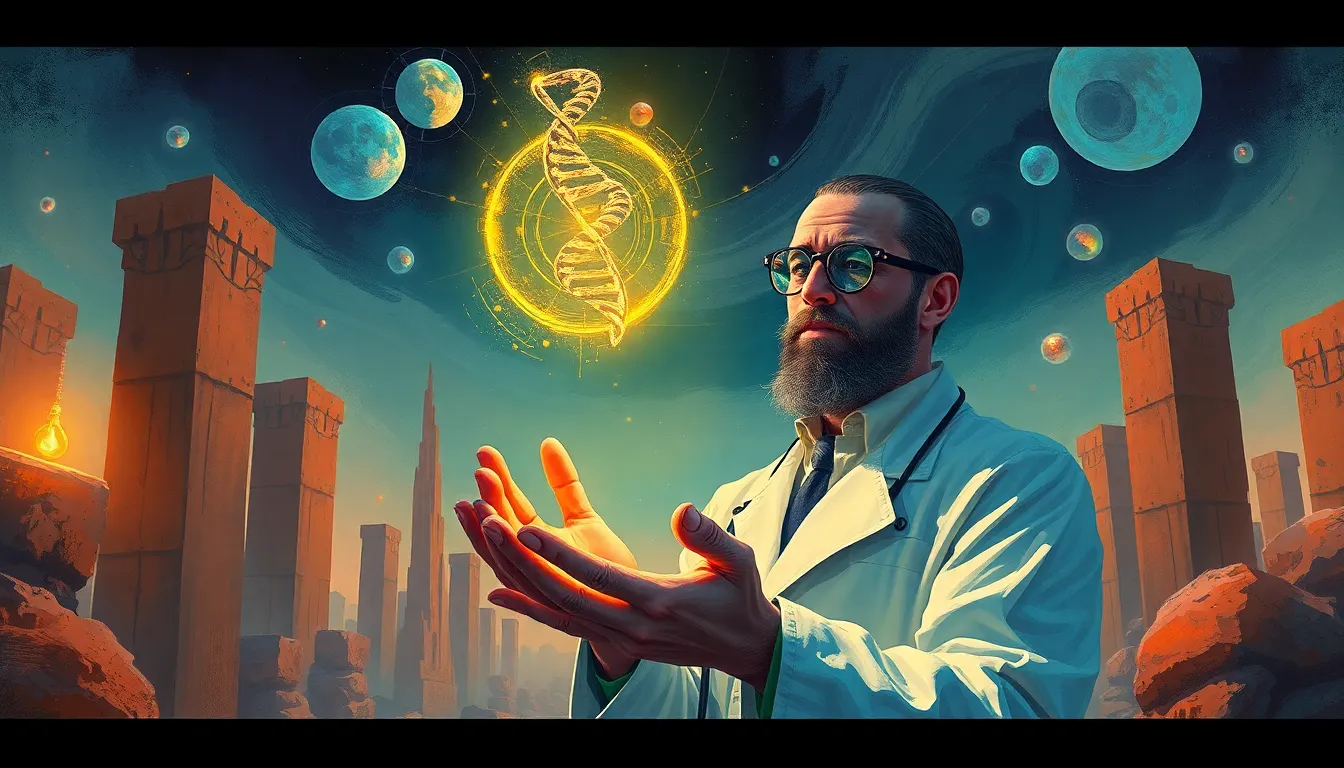
The Ethics of Designer Babies: Are We Going Too Far?
When scientists first mapped the human genome in 2003, few imagined how quickly we'd arrive at the crossroads we face today. The ability to select and modify genetic traits in human embryos has moved from science fiction to scientific reality, raising profound questions about where we draw the line. Designer babies - children whose genetic makeup has been selected or altered - represent one of the most controversial frontiers in reproductive technology, forcing us to confront difficult questions about human dignity, equality, and the limits of parental choice.
The technology is advancing faster than our ethical frameworks can adapt. As genetic selection tools become more accessible, we're left wondering: are we going too far? This question isn't just academic - it has real implications for how we understand humanity and what kind of society we want to create.
Understanding Designer Babies: From Prevention to Enhancement
When we talk about "designer babies," we're referring to a spectrum of genetic interventions. On one end is preimplantation genetic diagnosis (PGD), which screens embryos for serious genetic disorders before implantation during IVF. This technology helps parents avoid passing conditions like Tay-Sachs disease or cystic fibrosis to their children.
But the spectrum extends much further. Scientists can now potentially select for non-medical traits like eye color, height, or even more complex characteristics. The most powerful tool in this arena is CRISPR-Cas9, a technology that allows for precise editing of DNA sequences, effectively rewriting the genetic code of an embryo.
The distinction between prevention and enhancement isn't always clear. Preventing a debilitating disease seems ethically straightforward to many people. But what about selecting for higher intelligence? Or athletic ability? Or resistance to certain diseases? The line between treating illness and enhancing normal traits gets blurry fast.
"We started with obvious cases of severe genetic disorders," explains Dr. Elena Cortez, bioethicist at Cambridge University. "But technology rarely stays in the narrow lane we initially designed it for. The capability to select or alter more traits creates a slippery slope where medical necessity gives way to parental preference."
🧐
Did You Know? The term "designer baby" first appeared in newspapers in the 1980s, decades before the technology was actually possible. It was originally used to describe babies born through conventional IVF, showing how our anxieties about reproductive technology often precede the actual science.
The Core Ethical Dilemmas
The debate around designer babies centers on several fundamental ethical concerns that touch on our deepest values about human life and society.
First is the issue of autonomy. Every genetic choice parents make for their unborn child is a choice the child themselves had no say in. While parents already make countless decisions for their children, genetic modifications are uniquely permanent and potentially identity-defining.
"We're talking about choices that will follow a person through their entire life and potentially affect future generations," says Professor Thomas Lin of the Hastings Center for Bioethics. "That's a level of parental power we've never seen before."
Then there's the question of inequality. Genetic enhancements won't be equally available to everyone - at least not initially. If genetic advantages become available only to those who can afford them, we risk creating biological divisions that could make current social inequalities seem minor by comparison.
The concept of human dignity also comes into play. Does designing children reduce them to products rather than people with inherent worth? Critics argue that genetic enhancement commodifies human life and treats children as means to parental ends rather than ends in themselves.
Finally, there's the concern about genetic diversity. Natural reproduction introduces random variations that have been crucial to human evolution and adaptation. A world where parents select for similar "ideal" traits could reduce genetic diversity with unpredictable consequences for our species.
🧐
Did You Know? The first genetically edited babies were reportedly born in China in 2018. Scientist He Jiankui claimed to have edited the genes of twin girls to make them resistant to HIV. His work was widely condemned by the scientific community, and he was sentenced to three years in prison for violating Chinese regulations.
Global Perspectives and Regulations
Different cultures approach these questions with varying values and priorities, resulting in a patchwork of regulations worldwide.
In the United States, there's no comprehensive federal law governing genetic modification of embryos, though the FDA has authority over clinical trials involving genetic modification. This regulatory gap has led some to worry about the potential for "reproductive tourism," where parents travel to jurisdictions with fewer restrictions.
The UK has taken a more structured approach through its Human Fertilisation and Embryology Authority, which permits some forms of genetic testing while prohibiting modifications for non-medical reasons.
China initially had relatively permissive regulations, which enabled controversial experiments like the CRISPR babies mentioned earlier. Following international backlash, Chinese authorities tightened regulations significantly.
Religious perspectives add another dimension to this global conversation. Many traditional religious viewpoints express concern about human intervention in processes they consider divinely ordered. However, religious thinkers aren't uniformly opposed - some argue that healing and preventing suffering aligns with religious values.
What's striking is how these various perspectives often reflect deeper cultural values about individualism versus collectivism, the role of technology in society, and attitudes toward disability and difference.
Finding the Middle Ground
Is there a reasonable middle path that balances technological progress with ethical boundaries? Many experts believe so, though finding that balance requires nuanced thinking.
One approach distinguishes between therapy and enhancement - allowing genetic interventions to prevent serious diseases while prohibiting modifications aimed at "improving" normal traits. This distinction, while imperfect, provides a starting point for drawing ethical lines.
Another framework focuses on reversibility and consent. Permanent genetic changes that affect future generations raise more ethical concerns than changes that would affect only the individual and could theoretically be consented to later in life.
Transparency and democratic governance are also crucial. These technologies will shape our collective future, so decisions about their use shouldn't be left solely to scientists, corporations, or wealthy individuals.
"What we need is a slower, more inclusive conversation," argues Dr. Sarah Johnson, medical ethicist at Oxford. "One that includes diverse perspectives, especially from disability rights advocates and communities that have historically been targeted by eugenics programs."
Perhaps most importantly, we need to question the assumptions behind the push for genetic enhancement. The desire for "perfect" children often reflects problematic attitudes about human value and difference. A truly ethical approach might involve expanding our notions of what makes a good life rather than narrowing the acceptable range of human variation.
Conclusion: Proceeding with Caution
The genetic revolution offers tremendous potential for preventing suffering. Few would argue against eliminating devastating conditions that cause pain and premature death. But as we gain the power to reshape the human genome according to our preferences, we need to proceed with extraordinary caution.
The history of eugenics shows how easily benign intentions can lead to discrimination and abuse. Our understanding of the human genome, while advancing rapidly, remains incomplete. Genetic modifications could have unforeseen consequences that might not appear for generations.
Perhaps the wisest approach combines humility about our knowledge, respect for human dignity, commitment to equality, and democratic oversight of these powerful technologies. This doesn't mean halting progress entirely, but rather ensuring that progress serves human flourishing in its full diversity.
The question "Are we going too far?" has no simple answer. But by asking it persistently and thoughtfully, we're more likely to find a path that honors both the promise of genetic science and the profound value of each human life - designed or not.
Frequently Asked Questions
What exactly can scientists select for in embryos today?
Currently, preimplantation genetic diagnosis (PGD) can screen embryos for specific genetic disorders like cystic fibrosis, Tay-Sachs disease, and chromosomal abnormalities. Some clinics also offer sex selection. While it's theoretically possible to screen for certain physical traits like eye color, the genetic basis for most complex traits (including intelligence, personality, and athletic ability) involves multiple genes and environmental factors, making reliable selection for these traits currently impossible despite some companies' marketing claims.
Is genetic modification of embryos legal?
The legal status varies widely by country. Clinical application of human germline editing (changes that would be passed to future generations) is effectively prohibited in many countries, including the United States (through FDA restrictions), much of Europe, and China (following tightened regulations after the 2018 CRISPR babies controversy). However, research on embryos that won't be implanted is permitted in some jurisdictions. The regulatory landscape continues to evolve as the technology advances.
How is designer baby technology different from eugenics programs of the past?
Modern genetic selection differs from historical eugenics in several key ways. First, it's typically driven by individual parental choice rather than state coercion. Second, it focuses on preventing specific medical conditions rather than targeting broad social categories or "undesirable" traits. Third, it operates at the level of individual embryos rather than restricting who can reproduce. However, critics argue that despite these differences, both share concerning assumptions about what kinds of lives are considered valuable and the idea that genetic "improvement" is desirable, which is why many ethicists call for careful oversight and limitations.